Paper Pellets Wood Pellets for Rabbit Litter A Comparison
Choosing the right litter for your rabbit might seem like a small decision, but it can make a real difference to your pet’s comfort, hygiene, and daily care. Some rabbit owners prefer paper pellets because they are soft, absorbent, and generally low in dust. Others choose wood pellets because they are economical, compact, and effective […]
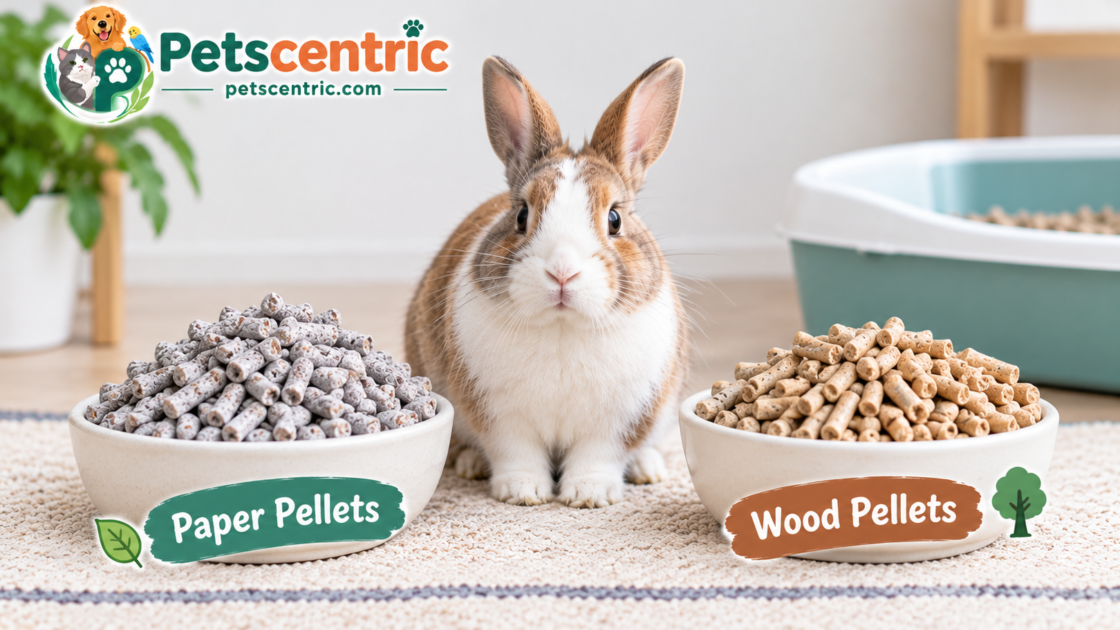
Choosing the right litter for your rabbit might seem like a small decision, but it can make a real difference to your pet’s comfort, hygiene, and daily care. Some rabbit owners prefer paper pellets because they are soft, absorbent, and generally low in dust. Others choose wood pellets because they are economical, compact, and effective at absorbing urine.
When comparing paper pellets vs wood pellets for rabbits, the best option depends on several factors, including absorbency, odor control, dust levels, cost, and your rabbit’s habits. A litter that works perfectly for one rabbit may not suit another.
Imagine cleaning your rabbit’s litter box one morning and finding that the bedding is wet, smells unpleasant, or sticks to the bottom. Frustrating, right? The right litter can make this routine easier while keeping your rabbit’s living area clean and comfortable.
In this guide, Petscentric explains the differences between paper and wood pellet litter, helping you choose a suitable option for your rabbit’s needs.
Understanding Rabbit Litter and Why It Matters
Rabbits spend a considerable amount of time around their litter boxes, particularly when they have a designated toilet area in their enclosure. Therefore, litter should be absorbent, comfortable, and safe when used as directed.
Unlike cats, rabbits may nibble materials while exploring their surroundings. This makes the choice of litter especially important. Avoid scented products, clumping cat litter, dusty materials, and substances that could cause digestive problems if swallowed.
Good rabbit litter helps absorb urine, manage unpleasant smells, and keep dampness away from your rabbit’s feet. However, litter alone cannot replace regular cleaning, fresh hay, good ventilation, and appropriate rabbit housing.
What Is Paper Pellet Rabbit Litter?
Paper pellet rabbit litter is usually made from processed recycled paper or other paper-based fibers. Manufacturers compress these materials into small pellets that absorb moisture when they come into contact with urine.
Paper pellets are popular among owners who want a lightweight, relatively dust-free alternative to traditional bedding. They are commonly available in pet stores and can be convenient for indoor rabbits.
Benefits of Paper Pellet Rabbit Litter
One major advantage is its generally low dust content. Quality paper pellets can be helpful for rabbits that are sensitive to airborne particles, although no litter is guaranteed to be completely dust-free.
Paper pellets also absorb moisture and help keep urine contained within the litter box. Depending on the product, they may soften or break apart as they become wet, making soiled areas easier to identify during cleaning.
Another benefit is their relatively lightweight structure. Owners who regularly lift, empty, and refill litter trays may find paper products easier to handle.
Paper pellets are also useful for rabbits that prefer a litter box without loose, fluffy bedding. Their compressed shape can help reduce material being scattered around the enclosure, although some rabbits will still kick pellets out while digging.
Possible Disadvantages of Paper Pellets
Paper-based litter can cost more than wood pellets, especially when you have several rabbits or need to clean large litter boxes frequently.
Some paper products also become saturated quickly when used in a small tray with heavy urine output. If the litter is too shallow, moisture may reach the bottom before the next cleaning.
Although paper pellets are generally low in dust, their quality varies. Broken pellets and degraded material can still create fine particles. Check the packaging and inspect the product before use.
What Is Wood Pellet Rabbit Litter?
Wood pellet rabbit litter is made from compressed wood fibers or sawdust. Some products are designed specifically for animal litter, while others are sold as fuel pellets. These products should not automatically be treated as interchangeable.
For rabbit litter, choose an appropriate, untreated, additive-free product with clear information about its composition. Avoid scented pellets, chemically treated wood, and products containing binders or other unsuitable additives.
Benefits of Wood Pellet Rabbit Litter
Wood pellets are often economical because compressed material can absorb a useful amount of moisture without requiring a thick layer. This makes them appealing to owners who want to manage litter expenses over time.
They can also provide effective rabbit litter odor control when used correctly. Urine enters the pellets, and many products break down into sawdust as they absorb moisture. The damp material can then be removed during cleaning.
Wood pellets are compact, easy to store, and often available in larger bags. This can be particularly useful for households with multiple rabbits.
Another advantage is that some wood pellet products hold their shape when dry, allowing owners to spread them evenly across the litter tray.
Possible Disadvantages of Wood Pellets
Not every wood pellet is appropriate for rabbits. The type of wood, manufacturing process, additives, and dust content all matter.
Some wood products may contain aromatic compounds that are unsuitable for small animals. Cedar and strongly aromatic wood products should be avoided, and pine products require particular care because processing methods and formulations vary. Do not assume that every pellet labeled as pine is safe.
Wood pellets may also feel harder underfoot than paper pellets. Although many rabbits tolerate them well, a rabbit that spends a long time sitting in the litter tray may benefit from a softer layer of hay over the pellets.
As the pellets break down, fine sawdust may accumulate. Removing wet, degraded material regularly helps prevent dust and dampness from building up.
Paper Pellets vs Wood Pellets for Rabbits: The Main Differences
The most useful way to compare these two options is to consider how they perform in everyday rabbit care.
Absorbency and Moisture Control
Both paper and wood pellets can absorb rabbit urine effectively, but performance varies by brand, pellet size, and the amount used.
Paper pellets generally absorb moisture into compressed paper fibers. Wood pellets often absorb urine and disintegrate into softer material. The speed and capacity of absorption depend on the product rather than the material name alone.
For either option, use enough litter to cover the tray base and follow the manufacturer’s instructions. Remove saturated sections before moisture spreads across the box.
Rabbit Litter Odor Control
Odor control is another important consideration, particularly when your rabbit lives indoors.
Wood pellets may help control urine odors by absorbing moisture and containing it within the material. Paper pellets can also manage odors effectively when the litter is kept dry and changed regularly.
Neither type eliminates odors completely. Strong ammonia smells usually indicate that urine-soaked litter needs changing, ventilation is inadequate, or the litter box is not being cleaned often enough.
Avoid masking odors with perfumes or scented additives. Rabbits have sensitive respiratory systems, and fragrance is not a substitute for hygiene.
Low Dust Rabbit Litter
Low dust rabbit litter is especially important for rabbits with respiratory sensitivity.
Paper pellets are generally low in dust when intact and well manufactured. Wood pellets may also have low dust levels before use, but crumbling pellets can release sawdust as they become wet or break apart.
If your rabbit sneezes repeatedly, develops nasal discharge, or shows changes in breathing, do not assume the litter is the only cause. Consult a rabbit-savvy veterinarian, especially if symptoms persist or breathing becomes difficult.
Comfort and Rabbit Behavior
Comfort is not always obvious from looking at the litter. Watch your rabbit’s behavior.
Does your rabbit readily enter the litter tray? Does it avoid sitting on the pellets? Does it dig excessively or push the material out? These small details can help you identify a preference.
Paper pellets may appeal to owners who want a lighter material. Wood pellets can work well when covered with a generous layer of fresh hay, which also encourages normal eating and foraging behavior.
Rabbits should always have access to fresh grass hay appropriate for their age and health. Hay should be placed where it stays clean and is easy to reach, rather than being allowed to become soaked in urine.
Rabbit Litter Cost Comparison
The cheapest bag does not always provide the lowest overall cost.
Wood pellets are often less expensive per bag, particularly when purchased in larger quantities. Paper pellets may have a higher upfront price, but the amount required depends on their absorption capacity and how frequently you clean the tray.
To make a fair comparison, consider the price per kilogram, how much litter you use each day, and how often the entire tray needs refreshing.
For example, a cheaper product may become saturated quickly and require more frequent replacement. A more expensive product may last longer under the same conditions. Your actual costs will depend on your rabbit’s urine output, litter tray size, and cleaning routine.
Which Is the Best Litter for Rabbits?
There is no single answer for every rabbit. The best litter for rabbits is a safe, absorbent, low-dust material that your pet tolerates comfortably and that you can maintain consistently.
Paper pellets may be a practical choice for owners who prioritize lightweight handling, generally low dust, and a paper-based product. They can also suit rabbits whose owners prefer to avoid wood-based materials.
Appropriate wood pellets may be suitable for owners looking for an economical litter with good moisture absorption. However, product composition and processing must be checked carefully before use.
If your rabbit has a history of respiratory problems, sensitive feet, or unusual litter-box habits, speak with a rabbit-savvy veterinarian about suitable options.
How to Use Rabbit Pellets Correctly
Start by cleaning the litter tray thoroughly and allowing it to dry. Add a suitable layer of paper or wood pellets according to the product instructions. A thin layer that fails to cover the base may not absorb enough urine.
Place fresh hay in a clean rack or designated area above or beside the litter tray. Many rabbits naturally use the toilet while eating hay, so this arrangement can support litter training.
Check the tray daily. Remove wet patches and droppings, and replace the litter whenever it becomes saturated or smells strongly of urine. The complete cleaning schedule will depend on the number of rabbits, the size of the tray, and how heavily it is used.
If you are switching from one litter to another, introduce the new material gradually. You can place a small amount in one section of the tray while retaining some familiar litter, provided the existing material is safe and clean.
Observe your rabbit for changes in toileting behavior, comfort, and appetite. If your rabbit suddenly stops urinating normally, strains to urinate, or produces no urine, seek urgent veterinary advice.
Common Rabbit Litter Mistakes to Avoid
One common mistake is choosing litter based on fragrance. Strong scents do not make a litter healthier, and they may irritate a rabbit’s sensitive respiratory system.
Another mistake is using ordinary cat litter without checking its suitability. Clumping clay litter and dusty mineral products are not appropriate choices for rabbits because of the potential risks if inhaled or swallowed.
Some owners also leave wet litter in place for too long because the top layer still looks dry. Always inspect the material beneath the surface.
Finally, do not assume that a rabbit’s litter-box problem is simply a bedding issue. Urinary discomfort, mobility problems, stress, and other health conditions can affect toileting behavior. Persistent changes deserve veterinary attention.
Conclusion
When comparing paper pellets vs wood pellets for rabbits, both options can be useful when you select a suitable product and maintain the litter tray properly. Paper pellets generally offer lightweight handling and low-dust performance, while appropriate wood pellets can provide economical moisture absorption and effective odor management.
The right choice depends on your rabbit’s comfort, the product’s ingredients, your cleaning routine, and your budget. Pay attention to dust, dampness, and any changes in your rabbit’s behavior rather than relying on price alone.
At Petscentric, our goal is to help rabbit owners make informed decisions about everyday pet care. Choose safe litter, provide plenty of fresh hay, keep the litter box clean, and consult a rabbit-savvy veterinarian if you notice persistent respiratory or urinary symptoms. Small changes in daily care can make a meaningful difference to your rabbit’s comfort and well-being.
Frequently Asked Questions
1. Are paper pellets or wood pellets better for rabbits?
Both can be suitable when made from safe, untreated materials. Paper pellets are generally lightweight and low in dust, while appropriate wood pellets are often economical and absorbent. The best option depends on your rabbit’s needs and the product’s quality.
2. Can I use wood stove pellets as rabbit litter?
Do not assume that wood stove pellets are safe for rabbits. Some may contain unsuitable wood, additives, binders, or other materials. Use only a product whose composition and manufacturing process are appropriate for rabbit litter.
3. Do paper pellets control rabbit urine smells?
Yes, paper pellets can help control odors by absorbing urine. However, their effectiveness depends on the product, the depth of the litter, ventilation, and cleaning frequency. Remove wet litter regularly to prevent ammonia odors.
4. How often should I change rabbit pellet litter?
Inspect the litter box daily and remove wet or soiled areas as needed. Replace the full contents whenever the litter becomes saturated, dirty, or strongly odorous. The exact schedule depends on the tray size and your rabbit’s habits.
5. Can rabbits eat paper or wood pellets?
Rabbit litter is not food, and you should discourage deliberate eating of either type. Small exploratory nibbles are different from repeatedly consuming the litter, but ingestion can still be risky depending on the material. If your rabbit persistently eats litter, or develops appetite changes or digestive symptoms, contact a rabbit-savvy veterinarian.