Fishless Aquarium Cycle A Testing-Based Beginner Guide
Starting a freshwater aquarium is exciting. You choose the tank, arrange the decorations, add plants, and imagine your fish swimming happily through their new home. But there is one important step that beginners often overlook: preparing the aquarium’s biological filter before adding fish. A fishless aquarium cycle helps establish beneficial bacteria that process harmful waste […]
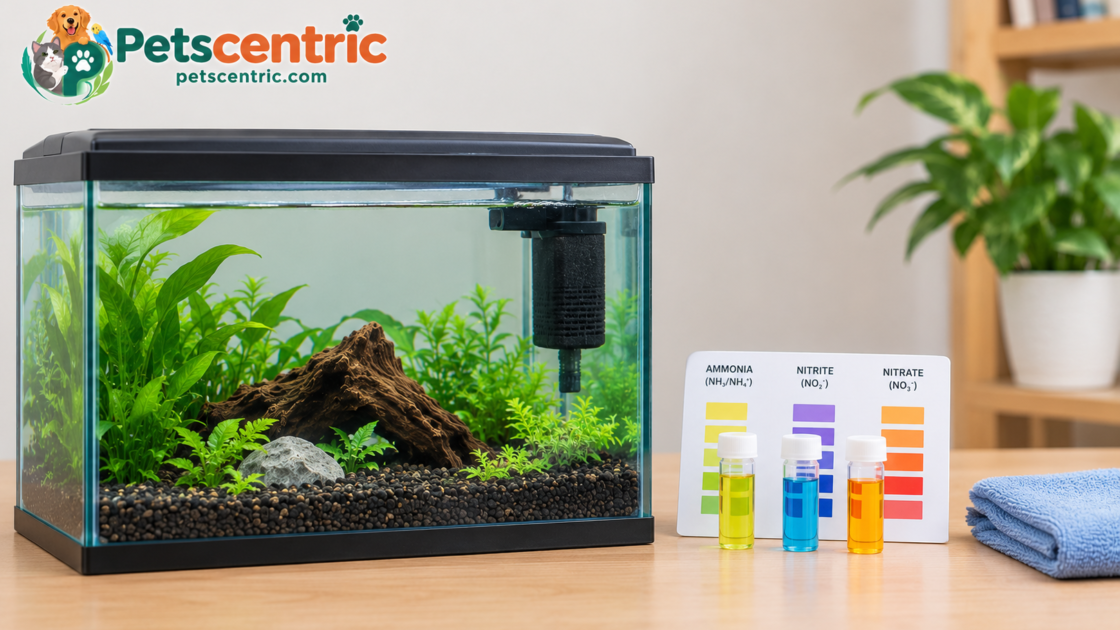
Starting a freshwater aquarium is exciting. You choose the tank, arrange the decorations, add plants, and imagine your fish swimming happily through their new home. But there is one important step that beginners often overlook: preparing the aquarium’s biological filter before adding fish.
A fishless aquarium cycle helps establish beneficial bacteria that process harmful waste before fish enter the tank. Instead of exposing fish to rising ammonia and nitrite, you build this biological filtration system in advance and monitor its progress with water tests.
The process takes patience. Sometimes ammonia disappears quickly, while nitrite remains high for days or even weeks. That’s normal. The key is to understand what your test results mean rather than guessing when the aquarium is ready.
In this guide, Petscentric explains how to complete the process, test your water, follow a practical schedule, troubleshoot delays, and recognize when your aquarium is ready for its first fish.
What Is a Fishless Aquarium Cycle?
A fishless aquarium cycle is the process of establishing beneficial microorganisms in an aquarium without keeping live fish in it. These microorganisms develop primarily in the filter media and other surfaces where water and oxygen are available.
Their job is to process nitrogenous waste through a process called nitrification. Fish waste, uneaten food, and decaying plant material can release ammonia, which is toxic to aquatic animals.
Beneficial bacteria gradually convert ammonia into nitrite and then nitrate. Although nitrate is generally less toxic than ammonia and nitrite, it can still accumulate and needs to be managed through water changes and suitable aquarium maintenance.
The goal is to create a stable biological filter before introducing fish. This makes aquarium setup safer and gives the developing bacterial colony time to grow without putting animals at risk.
How the Aquarium Nitrogen Cycle Works Without Fish
An aquarium nitrogen cycle without fish follows the same basic biological process as a cycle with fish. The difference is that you provide an ammonia source without relying on fish waste.
<LearningViz type_id=”NITROGEN_CYCLE” initial_values={{“focus_process”:”whole cycle”}} locale_override=”en-US”/>
Stage One: Ammonia Is Introduced
The process begins when an ammonia source enters the aquarium. Many beginners use aquarium-grade ammonium chloride because it allows them to measure the amount added more consistently.
As ammonia becomes available, ammonia-oxidizing microorganisms begin developing. These organisms convert ammonia into nitrite, but their population needs time to grow.
During this stage, ammonia readings may remain elevated for several days. That does not automatically mean something is wrong.
Stage Two: The Nitrite Spike
As ammonia processing improves, nitrite often starts appearing in water tests. Nitrite is also toxic to fish, so the aquarium must remain fish-free.
A fishless cycle nitrite spike can be surprising because ammonia may already be falling while nitrite continues to rise. This happens because the microorganisms responsible for processing nitrite need time to establish themselves.
Eventually, nitrite begins to decline as the second group of microorganisms becomes more effective.
Stage Three: Nitrate Accumulation
As nitrite is converted, nitrate often becomes detectable. This is an encouraging sign, although nitrate alone cannot confirm that the aquarium is fully cycled.
Some planted aquariums consume nitrate, and tap water may already contain it. Therefore, interpret nitrate results alongside ammonia and nitrite readings rather than relying on a single measurement.
What You Need Before Starting Fishless Cycling
You do not need an expensive aquarium laboratory to complete this process. A few reliable supplies are enough.
Prepare your aquarium with its intended filter, filter media, heater if required by your planned fish species, and a suitable water conditioner. Keep the filter running continuously so that the developing microorganisms receive oxygen and water flow.
A liquid aquarium test kit that measures ammonia, nitrite, and nitrate is especially useful. Follow the manufacturer’s instructions carefully, including the recommended sample volume, testing time, and color comparison method.
You will also need a controlled ammonia source intended for aquarium cycling. Avoid household ammonia products containing fragrances, detergents, surfactants, or other additives that may be unsafe for aquarium use.
If possible, use established aquarium filter media from a healthy, disease-free tank. It can introduce an existing microbial community and may shorten the cycling period, although it does not eliminate the need for testing.
How to Start a Fishless Aquarium Cycle Step by Step
Prepare the Aquarium
Set up the aquarium exactly as you intend to run it after fish are introduced. Add the substrate, decorations, plants, and filter media, then fill the tank with appropriately conditioned water.
Start the filter and heater, if needed. Maintain a stable temperature suitable for the beneficial microorganisms and the future fish species.
Avoid frequently changing the equipment or cleaning the filter during cycling. The goal is to create a consistent environment where the biological filter can develop.
Add a Controlled Ammonia Source
Follow the instructions for your aquarium-grade ammonia product to reach an appropriate cycling concentration. A commonly used target is around 1–2 parts per million (ppm) of total ammonia, although the ideal approach depends on the product, aquarium conditions, and test kit.
Do not keep adding ammonia simply because the cycle seems slow. Excessive ammonia can inhibit the microorganisms you are trying to establish, particularly at higher concentrations.
Test the water after dosing to confirm the actual reading. The measured result matters more than the estimated amount poured into the tank.
Monitor Ammonia, Nitrite, and Nitrate
Record your results in a notebook or spreadsheet. Write down the date, ammonia reading, nitrite reading, nitrate reading, and any ammonia you added.
This record helps you recognize trends. For example, falling ammonia followed by rising nitrite indicates that the first stage of biological processing is developing.
As the cycle progresses, check whether nitrite begins declining and nitrate becomes detectable. Avoid interpreting one unusual reading as proof of success or failure.
Wait for the Biological Filter to Mature
The microorganisms need time to establish a population capable of processing the waste load. Some aquariums develop this capacity within a few weeks, while others take longer.
Temperature, pH, oxygen availability, filter media, the ammonia source, and the presence of established bacteria can all affect the timeline.
Continue testing and maintain stable conditions. A fishless cycle is complete when the aquarium demonstrates reliable processing capacity, not simply when a certain number of days has passed.
Fishless Cycling Test Schedule for Beginners
A consistent testing routine makes the process easier to understand. The following schedule is a practical starting point, rather than a strict timetable that every aquarium must follow.
Days 1–3
After setting up the aquarium and adding the initial ammonia dose, test ammonia and nitrite. Record your starting results and confirm that the filter is operating properly.
Nitrite may remain undetectable at first. This is expected because the microbial community is still developing.
Days 4–7
Test ammonia and nitrite every day or every other day. Check nitrate periodically as well, particularly once nitrite becomes detectable.
If ammonia starts falling and nitrite appears, the first stage of the cycle is progressing. Avoid adding another full dose automatically while ammonia remains high.
Week 2 and Beyond
Continue testing every one or two days, adjusting the frequency according to your readings. During the nitrite spike, the nitrite test may show a very high result or exceed the kit’s measurable range.
If this happens, follow the test kit’s instructions for retesting or dilution, using the manufacturer’s recommended procedure. Do not assume that an out-of-range reading means the cycle has failed.
Once ammonia and nitrite are consistently low or undetectable, test the aquarium’s ability to process a measured ammonia dose. This is the most useful way to verify that the biological filter is working.
How to Know When a Fishless Cycle Is Finished
The most dependable way to confirm completion is to challenge the biological filter with an appropriate measured ammonia dose and test the results.
After dosing according to your chosen cycling method, check the water approximately 24 hours later. A commonly used completion benchmark is that ammonia and nitrite both return to undetectable levels within that period.
For example, if you add a controlled dose around 1–2 ppm and both readings return to zero within 24 hours, that provides strong evidence that the filter can process the ammonia load. The appropriate challenge concentration depends on the intended aquarium and the test method.
Nitrate may rise during this process, but it is not the deciding factor. Some tanks have plants that absorb nitrate, and some water supplies contain nitrate before cycling begins.
Before introducing fish, check the pH, temperature, and other water conditions required by your chosen species. If nitrate is elevated, perform a suitable partial water change using conditioned water. Make sure the filter remains running and avoid letting the biological media dry out.
Introduce fish gradually rather than immediately adding a large population. Continue testing ammonia and nitrite after stocking because a newly cycled filter may need time to adjust to a different waste load.
Why Is My Fishless Cycle Stalled?
A fishless cycle stalled for several days can make beginners feel that they have done something wrong. In reality, several conditions can slow microbial growth.
One possible reason is a high ammonia concentration. If ammonia has been repeatedly added while readings remain elevated, stop adding more and retest the water. Allow the existing ammonia to be processed before deciding whether further action is necessary.
Another possibility is low pH. Nitrification can slow substantially in acidic conditions, so check pH if progress has stopped. Avoid making sudden chemical adjustments; instead, investigate the cause and make changes gradually when needed.
Poor oxygenation can also interfere with biological filtration. Check that the filter is running correctly and that water is moving through the media. A clogged filter or insufficient circulation may limit oxygen delivery.
Temperature can matter, too. If the aquarium is much colder than the conditions recommended for cycling, microbial development may take longer. Keep the temperature stable and appropriate for the planned fish.
Finally, test-kit errors can make a healthy cycle look stalled. Check expiration dates, follow reagent instructions, and compare results in suitable lighting. If readings seem inconsistent, repeat the test before making major changes.
Common Fishless Cycling Mistakes to Avoid
One frequent mistake is adding fish before the biological filter is ready. Clear water does not necessarily mean safe water, and ammonia or nitrite may be present even when the aquarium looks clean.
Another mistake is changing or replacing the filter media during cycling. This can remove a significant portion of the developing microbial population. If the media needs maintenance, follow the manufacturer’s guidance and avoid unnecessary cleaning or replacement.
Using too much ammonia is also counterproductive. A larger dose does not guarantee a faster cycle, and excessive concentrations may delay progress.
Some beginners become discouraged when nitrate is not detected. Nitrate readings can be affected by plants, source water, testing procedures, and the stage of the cycle. Evaluate all three nitrogen-related measurements instead of relying on nitrate alone.
Finally, avoid repeatedly changing the cycling method. Consistent conditions and reliable testing are more helpful than adding several unverified products or making frequent adjustments.
Conclusion
A successful fishless aquarium cycle is built on patience, consistent testing, and a stable environment. By introducing a controlled ammonia source and monitoring ammonia, nitrite, and nitrate, you can establish biological filtration without exposing fish to avoidable risks.
Remember that a nitrite spike is often a normal stage of development, while a stalled cycle calls for careful troubleshooting rather than guesswork. Confirm completion by demonstrating that ammonia and nitrite return to undetectable levels within an appropriate testing period.
At Petscentric, we believe responsible freshwater aquarium care begins before the first fish arrives. Take your time, keep accurate records, and let your test results guide your decisions. A properly prepared aquarium gives its future inhabitants a safer start.
Frequently Asked Questions
1. How long does a fishless aquarium cycle take?
Many aquariums take around 2–6 weeks, but the timeline varies. Established filter media, stable temperature, adequate oxygen, and suitable water chemistry can help the process progress. Test results, not the calendar, determine when the aquarium is ready.
2. Can I cycle an aquarium without fish or live plants?
Yes. A fishless cycle can be completed without fish or live plants by providing a controlled ammonia source and allowing beneficial microorganisms to establish themselves. Plants are optional, although they can influence nitrate readings and nutrient availability.
3. Should I add more ammonia during a nitrite spike?
Not automatically. If ammonia is still elevated, adding more may create an unnecessarily high concentration. Monitor both ammonia and nitrite, follow your cycling method, and add further ammonia only when appropriate for the current readings.
4. Why is my aquarium nitrite staying high?
Nitrite may remain elevated while the microorganisms that convert it into nitrate are developing. High ammonia, low pH, insufficient oxygen, or testing problems may also contribute. Check your water conditions and allow the cycle to progress before making drastic changes.
5. How can I confirm that my fishless cycle is complete?
Use a controlled ammonia challenge appropriate for your aquarium. If ammonia and nitrite both return to undetectable levels within approximately 24 hours, the result indicates that the biological filter can process that load. Check the water conditions, manage nitrate if necessary, and introduce fish gradually.