
How to Spot Dog Fever Symptoms Signs Causes
A dog who suddenly seems tired, stops eating, or feels unusually warm can make any pet owner worry. You may wonder, “Does my dog have a fever?” Knowing the common dog fever symptoms can help you notice a problem early and decide when veterinary care is needed. Fever is not a disease by itself. It […]
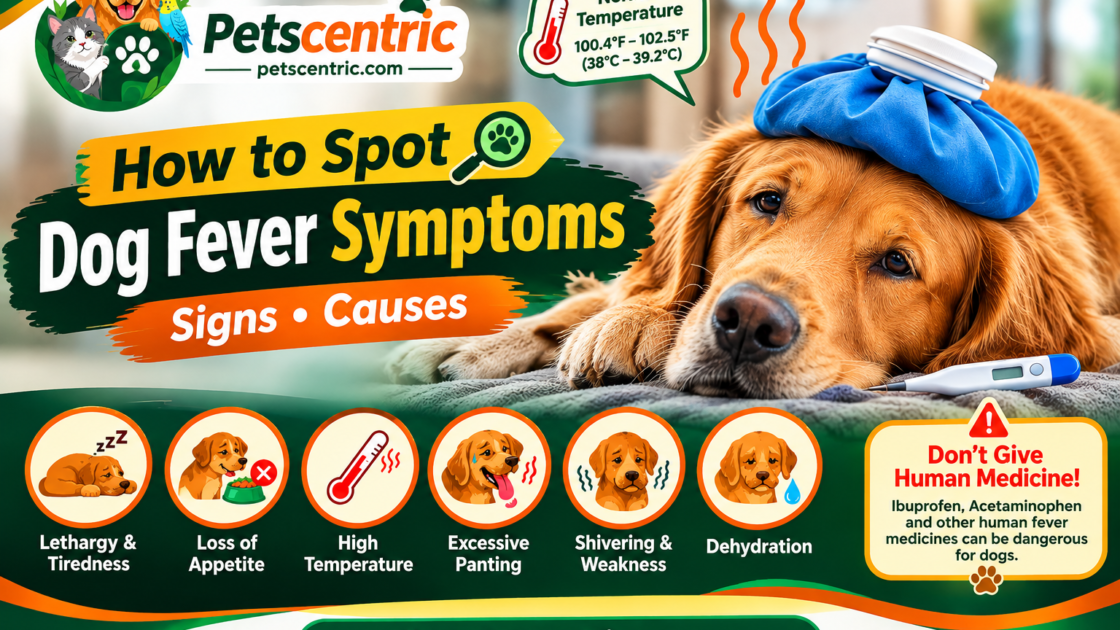
A dog who suddenly seems tired, stops eating, or feels unusually warm can make any pet owner worry. You may wonder, “Does my dog have a fever?” Knowing the common dog fever symptoms can help you notice a problem early and decide when veterinary care is needed.
Fever is not a disease by itself. It is usually a response from the body to infection, inflammation, or another underlying problem. Dogs also have a naturally higher body temperature than humans, so simply touching your dog’s nose or ears is not a reliable way to tell whether they have a fever.
What Is a Normal Dog Temperature?
Understanding the normal dog temperature is the first step. A healthy dog generally has a body temperature around 100.4°F to 102.5°F (38°C to 39.2°C). A temperature above this range may indicate an elevated temperature, while a temperature around 103°F (39.4°C) or higher is commonly considered a fever.
The best way to check your pet is with an appropriate digital thermometer and veterinary guidance on safe technique. Feeling your dog’s skin, paws, or nose can give you a clue that something is different, but it cannot confirm a fever.
A high temperature in dogs can happen for several reasons. Sometimes the immune system is fighting an infection. Other times, overheating, inflammation, certain medications, toxins, or immune-related conditions may be involved.
Common Dog Fever Symptoms to Watch For
The signs can vary from one dog to another. Some pets may have a mild temperature increase and still act almost normal, while others become obviously unwell.
One of the most noticeable dog fever signs is a sudden change in normal behavior. Your dog may become unusually quiet, sleepy, or reluctant to play. They might stay in one place more than usual and show less interest in their surroundings.
Loss of appetite is another common warning sign. A dog that normally rushes to the food bowl but suddenly refuses a meal deserves attention, especially if other symptoms appear at the same time.
Shivering or trembling can also occur. However, shaking does not always mean fever. Dogs may tremble because they are frightened, cold, painful, or stressed, so this symptom needs to be considered with the bigger picture.
Other possible symptoms of fever in dogs include warm ears or body, red-looking eyes, panting, weakness, reduced activity, dehydration, and sometimes vomiting or diarrhea. Coughing, sneezing, nasal discharge, or other respiratory changes may point toward an underlying infection.
How to Recognize Symptoms of Fever in Dogs
Imagine your normally energetic Labrador suddenly spends the afternoon lying in a quiet corner. He refuses his favorite treat and seems less interested in going outside. That change matters.
A single symptom may not prove anything. A combination of changes is more useful. Pay attention to your dog’s appetite, energy, breathing, drinking habits, bathroom habits, and general behavior.
Some healthy weight for my dog can overlap with many other illnesses. For example, tiredness may occur with pain, stomach problems, dehydration, infection, or stress. That is why guessing the cause from symptoms alone can be risky.
If your dog seems unwell and you suspect a fever, measuring the dog body temperature is more informative than relying on touch. If your dog resists temperature checking, do not force the procedure and risk injury. A veterinarian can perform the assessment safely.
What Causes Fever in Dogs?
Fever is often the body’s response to something happening internally. Infections caused by bacteria, viruses, fungi, or other organisms can trigger an elevated temperature. Ear infections, respiratory infections, urinary problems, and infected wounds are examples of conditions that may be associated with fever.
Inflammation can also play a role. Some immune-mediated diseases and inflammatory conditions may cause an abnormal temperature. In other situations, exposure to toxins or certain medications may contribute to illness.
Heat-related illness is different from a simple infection-related fever and can become an emergency very quickly. A dog that has been exposed to excessive heat and is heavily panting, weak, confused, collapsing, or having difficulty breathing needs immediate veterinary attention.
Because there are many possible causes, treating the temperature without identifying the underlying problem is not always helpful. The goal is to find out why your dog is unwell.
Should Your Dog Rest During Fever?
Yes, quiet rest is usually helpful while you arrange appropriate veterinary advice. Dog rest during fever means keeping your pet in a comfortable, calm environment and avoiding strenuous exercise, running, or exciting play.
Offer access to fresh water and monitor whether your dog is drinking. Do not force large amounts of food or water if your dog is nauseated or having trouble swallowing.
Keep your pet comfortable rather than trying to aggressively cool them down. If overheating is suspected, the situation is different and needs urgent veterinary guidance. Avoid ice baths or extreme cooling methods unless a veterinarian specifically advises you to use them.
Rest alone will not cure an infection or other underlying illness. Think of it as supportive care while you determine what is actually happening.
Can You Give Dogs Human Fever Medicine?
This is where many well-meaning owners make a dangerous mistake. Can you give dogs human fever medicine? In general, you should not give your dog human medication unless a veterinarian has specifically prescribed or instructed it for that individual pet.
Human pain and fever medicines can affect dogs very differently from humans. The correct medication, dose, and safety depend on factors such as your dog’s weight, age, health, and other medications.
Ibuprofen toxicity in dogs is a serious concern. Ibuprofen can cause gastrointestinal irritation or ulceration, kidney problems, and other potentially severe complications. Never assume a small human dose is automatically safe for a dog.
Acetaminophen toxicity in dogs is another important concern. Acetaminophen can cause serious poisoning, including liver injury and damage to red blood cells. Some pets may become critically ill after exposure.
You may also wonder about aspirin for dogs fever. Aspirin should not be given casually or used as a home fever treatment without veterinary direction. It can cause stomach irritation, ulcers, bleeding, and other complications, and it may interact with other medicines.
If your dog accidentally receives human medicine, contact a veterinarian promptly and tell them the exact product, strength, approximate amount, and time it was given. Do not wait for poisoning symptoms to appear.
When Should You Call the Veterinarian?
Not every slight temperature change means your dog is in immediate danger, but persistent illness should not be ignored. Contact your veterinarian if your dog has a suspected fever along with significant lethargy, repeated vomiting, diarrhea, coughing, difficulty breathing, pain, refusal to drink, or a major change in behavior.
Urgent veterinary attention is especially important if your dog appears confused, collapses, has seizures, struggles to breathe, has very pale or blue gums, or may have been exposed to a toxin or human medication.
Puppies, senior dogs, pregnant dogs, and pets with existing health problems may require quicker assessment because they can become unwell more rapidly.
A veterinarian may examine your dog, measure its temperature, check hydration, listen to the heart and lungs, and recommend blood tests, urine testing, imaging, or other diagnostic work depending on the suspected cause.
How to Help Your Dog While Waiting for Veterinary Care
Keep your dog somewhere quiet and comfortable. Provide fresh drinking water and avoid exercise. Observe changes rather than constantly disturbing your pet.
Write down when the symptoms began and what you noticed first. If your dog has vomited, had diarrhea, eaten something unusual, been exposed to heat, or received any medication, tell the veterinarian.
This information can save time during the consultation. Small details sometimes matter.
Most importantly, don’t try to bring down a suspected fever with human medicine. The temperature is a symptom, not the whole illness. Finding and treating the cause is what matters.
Final Thoughts
Recognizing dog fever symptoms early can help you respond before a minor problem becomes more serious. Changes such as unusual tiredness, reduced appetite, shivering, excessive panting, dehydration, or a measured temperature above the normal range deserve attention.
Remember that a warm nose or ears alone cannot diagnose fever. A proper temperature reading and veterinary assessment provide much better information. Never use human fever medicine as a DIY treatment, especially products containing ibuprofen or acetaminophen.
At Petscentric, our goal is to help pet owners understand important warning signs and make informed decisions about everyday pet care. When your dog seems noticeably different from normal, trust that observation. If something feels wrong, getting professional veterinary advice is the safest choice.
Frequently Asked Questions
1. What are the most common dog fever symptoms?
Common dog fever symptoms may include lethargy, reduced appetite, shivering, panting, warm-feeling skin, dehydration, weakness, and changes in normal behavior. These signs can also occur with other illnesses, so they do not confirm fever by themselves.
2. What is a normal dog temperature?
A typical normal dog temperature is approximately 100.4°F to 102.5°F (38°C to 39.2°C). A temperature around 103°F (39.4°C) or higher may indicate fever, but interpretation depends on the individual dog and circumstances.
3. Can I give ibuprofen or acetaminophen to my dog for fever?
No. Ibuprofen toxicity in dogs and acetaminophen toxicity in dogs can cause serious health problems. These medications should only be used if specifically directed by a veterinarian. If accidental ingestion occurs, seek veterinary help promptly.
4. Should I give aspirin for dogs with fever?
Do not give aspirin for dogs fever without veterinary advice. Aspirin can cause stomach irritation, ulcers, bleeding, and other complications. Your veterinarian can determine whether any medication is appropriate for your dog.
5. How can I help my dog rest during fever?
For dog rest during fever, keep your pet in a quiet, comfortable area and provide access to fresh water. Avoid strenuous activity and monitor their symptoms. If the dog becomes severely weak, has breathing problems, collapses, or shows other serious symptoms, seek urgent veterinary care.