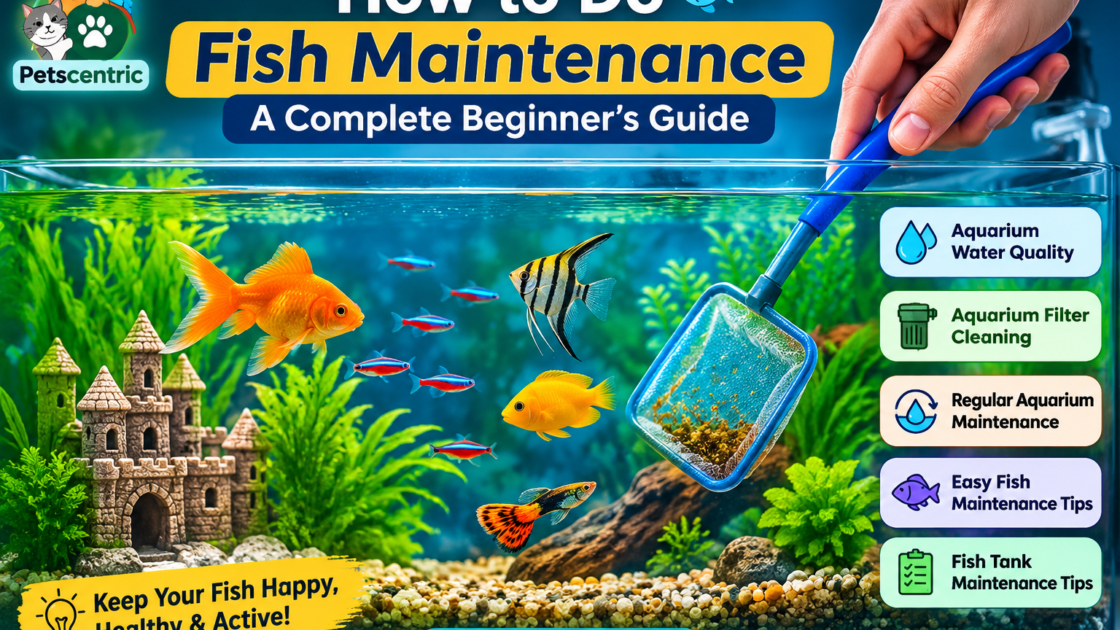
How to Do Fish Maintenance A Complete Beginner’s Guide
Keeping an aquarium looks simple from the outside. Clear water, colorful fish, a few plants, maybe some decorations. But behind that beautiful view is a small ecosystem that needs regular care. This is where fish maintenance becomes important. Good aquarium care is not only about feeding your fish every day. It also means checking water […]
Keeping an aquarium looks simple from the outside. Clear water, colorful fish, a few plants, maybe some decorations. But behind that beautiful view is a small ecosystem that needs regular care. This is where fish maintenance becomes important.
Good aquarium care is not only about feeding your fish every day. It also means checking water conditions, cleaning the tank, caring for the filter, removing waste, and watching your fish for unusual behavior.
If you’re new to aquariums, don’t worry. You don’t need to spend hours cleaning your tank every day. With a simple routine and a little consistency, easiest freshwater fish for beginners can become easy and manageable.
What Is Fish Maintenance?
Fish maintenance is the regular care required to keep an aquarium clean, stable, and healthy for its fish and other aquatic life.
A healthy aquarium depends on several things working together. Water quality, filtration, feeding, temperature, lighting, and tank cleanliness all matter.
The goal isn’t to make your aquarium look perfectly spotless. In fact, constantly scrubbing everything can disturb the natural biological balance inside the tank.
Instead, good maintenance means removing excess waste while protecting the beneficial bacteria that help keep the aquarium stable.
That balance is the real secret.
Why Regular Aquarium Maintenance Matters
Fish live in water, so the quality of that water directly affects their health. In a home aquarium, waste from fish, leftover food, and decaying plants can gradually affect the water.
Without proper care, ammonia and nitrite can become dangerous. Nitrate can also increase over time.
This is why regular aquarium maintenance is so important. Small tasks performed consistently are much easier than trying to rescue a neglected aquarium later.
You may also notice that well-maintained tanks usually have healthier-looking fish, clearer water, and fewer unpleasant odors.
Simple. But effective.
Aquarium Water Quality Comes First
One of the most important parts of aquarium care is maintaining good aquarium water quality.
Clear water doesn’t always mean healthy water. Your aquarium may look perfect while ammonia, nitrite, or nitrate levels are becoming problematic.
For beginners, testing the water regularly is a smart habit. Aquarium test kits can help you monitor important parameters and identify problems before your fish become seriously stressed.
Temperature should also be appropriate for the species you keep. Tropical fish generally require warmer water than many cold-water species.
If you’re keeping different species together, make sure their temperature and water-condition requirements are compatible. Don’t choose fish simply because they look nice together.
Research first.
How Often Should You Clean a Fish Tank?
The exact cleaning schedule depends on tank size, fish population, filtration, plants, and feeding habits. There isn’t one perfect schedule for every aquarium.
For many home aquariums, a partial water change every week or two can be a useful starting point. However, your water tests should guide your routine rather than blindly following a calendar.
During a water change, remove some old aquarium water and replace it with properly prepared water.
Never replace all the aquarium water unnecessarily. A complete water replacement can cause major changes in temperature and chemistry, which may stress your fish.
Regular, moderate maintenance is usually better.
Aquarium Filter Cleaning: What Beginners Should Know
Your filter is one of the hardest-working pieces of aquarium equipment. It helps remove debris and provides a surface where beneficial bacteria can live.
However, aquarium filter cleaning needs to be done carefully.
A common beginner mistake is washing filter media under untreated tap water. Tap water may contain chlorine or chloramine, which can damage the beneficial bacteria living on the media.
Instead, when cleaning mechanical filter media, gently rinse it in some of the old aquarium water removed during a water change.
Don’t try to make the filter media look brand new. That’s not the goal.
The goal is to remove excessive debris while preserving the biological filtration that supports a healthy aquarium.
Filter components should also be checked periodically for blockages, reduced water flow, or unusual noise.
Easy Fish Maintenance Tips for Beginners
If you’re just starting out, focus on consistency rather than doing everything at once.
One of the easiest fish maintenance tips is to observe your fish whenever you feed them. Look for changes in swimming, appetite, body condition, or behavior.
Your fish can sometimes tell you that something is wrong before a test kit does.
Another useful habit is to avoid overfeeding. Uneaten food eventually breaks down and contributes to poor water conditions.
Feed an appropriate amount and remove obvious leftover food when necessary.
Also check the aquarium temperature regularly. A heater malfunction can happen quietly, and fish may become stressed before you notice the problem.
Keep the glass, decorations, plants, and substrate reasonably clean, but don’t obsess over making every surface spotless.
Your aquarium is a living system.
Fish Tank Maintenance Tips That Save Time
Good fish tank maintenance tips are mostly about preventing problems.
For example, don’t overcrowd your aquarium. Too many fish produce more waste and place greater pressure on your filtration system.
Choose fish according to the tank’s size and their adult requirements. A species that looks tiny in a store may grow considerably larger.
If you’re considering something specific, searches such as best fish for 5 gallon tank can help you begin your research, but don’t rely on a list alone. Consider adult size, temperament, activity level, water temperature, and filtration requirements before purchasing any fish.
Another smart habit is keeping a simple maintenance record. Write down water changes, test results, filter cleaning, and unusual observations.
It takes less than a minute.
But months later, that little record can become extremely useful.
Don’t Forget the Aquarium Substrate
The gravel or sand at the bottom of your aquarium can collect uneaten food, fish waste, and other debris.
This doesn’t mean you should completely replace the substrate every time you clean the aquarium.
During a water change, use an aquarium gravel vacuum to remove accumulated debris from the substrate.
If you have live plants, be more careful around their roots. Some planted aquariums also rely on the substrate as part of their biological environment.
Again, gentle cleaning is the better approach.
Watch Your Fish for Warning Signs
One of the most overlooked parts of fish maintenance is simply watching the animals.
Healthy fish are generally active according to their normal species behavior and show a consistent appetite.
Pay attention if a fish suddenly hides more than usual, stops eating, breathes rapidly, stays near the surface, rubs against objects, or develops unusual spots or damaged fins.
These signs don’t automatically tell you what the problem is. Poor water quality, disease, stress, aggression, temperature problems, and other issues can produce similar symptoms.
That’s why testing the water should be one of your first steps when something seems unusual.
Don’t immediately add random medications or chemicals.
Find the cause first.
Creating a Simple Maintenance Routine
A beginner-friendly routine doesn’t need to be complicated.
Every day, take a quick look at the fish, check the temperature if necessary, and make sure equipment appears to be operating normally.
During your regular weekly or biweekly maintenance, test water when appropriate, inspect the filter, remove visible debris, clean the glass, and perform a suitable partial water change.
Over time, you’ll learn what your specific aquarium needs.
A heavily stocked aquarium may require more attention than a lightly stocked planted tank. A small aquarium can also change quickly because it contains less water to dilute waste.
So don’t compare your routine with someone else’s aquarium online.
Your tank is unique.
Common Beginner Mistakes to Avoid
Many aquarium problems happen because owners try to do too much.
Over-cleaning the aquarium can disturb beneficial bacteria. Overfeeding can increase waste. Replacing too much water at once can create sudden changes in water chemistry.
Another mistake is adding fish too quickly before the aquarium has established a stable biological cycle.
New aquarium owners should learn about the nitrogen cycle before stocking their tank. Understanding ammonia, nitrite, nitrate, and beneficial bacteria makes aquarium care much easier.
And remember, adding more fish isn’t always better.
A calm, appropriately stocked aquarium is usually easier to maintain and more comfortable for its inhabitants.
Final Thoughts
Successful fish maintenance isn’t about spending all day cleaning your aquarium. It’s about creating a simple routine and sticking with it.
Focus on stable aquarium water quality, appropriate feeding, proper filtration, sensible stocking, and regular observation. Learn how your particular fish behave, because changes in behavior can sometimes be an early warning sign.
For beginners, the biggest lesson is simple: don’t wait for a problem before caring for your aquarium.
Small actions make a big difference.
At Petscentric, our goal is to make pet care information easier to understand so you can make better decisions for the animals in your care. Whether you’re setting up your first tank or improving an established aquarium, consistent care is what keeps the underwater world healthy and enjoyable.
Frequently Asked Questions
1. How often should I perform fish maintenance?
For many aquariums, basic checks should happen daily, while partial water changes and other maintenance tasks are often performed weekly or every couple of weeks. The ideal schedule depends on tank size, stocking, filtration, plants, and water-test results.
2. How do I maintain good aquarium water quality?
Test the water regularly, avoid overfeeding, perform appropriate partial water changes, maintain your filter, and avoid overcrowding the aquarium. Stable water conditions are more important than simply having crystal-clear water.
3. How should I clean my aquarium filter?
Gently rinse appropriate filter media using some removed aquarium water rather than untreated tap water. This helps remove excess debris while protecting beneficial bacteria.
4. Can I completely clean my fish tank?
You generally don’t need to completely strip and sterilize your aquarium during routine maintenance. Excessive cleaning can disturb the biological balance. Regular partial water changes and gentle cleaning are usually more appropriate.
5. What is the most important maintenance task for beginners?
For most beginners, monitoring water quality and maintaining a consistent routine are among the most important tasks. A beautiful-looking aquarium isn’t necessarily a healthy aquarium, so water testing and observation should not be ignored.