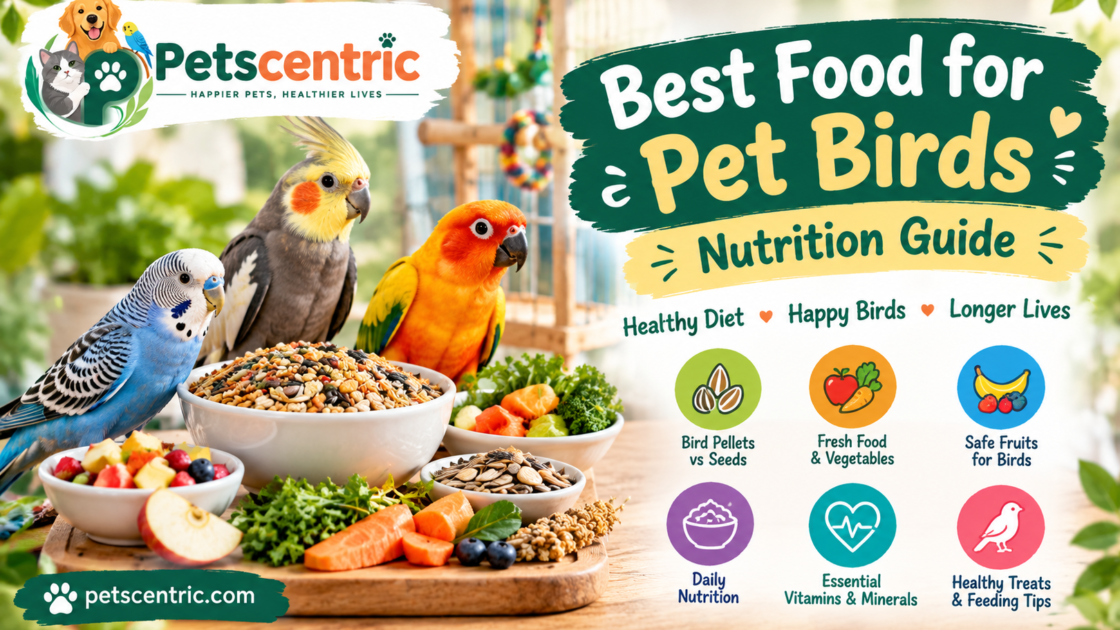
Best Food for Pet Birds Complete Nutrition Guide
Pellets: 70% of daily intake for budgies, cockatiels, and most parrots. Vegetables: 25%, dark leafy greens first. Fruit, seeds, treats: 5% combined. Toxic: avocado, chocolate, caffeine, alcohol, onion, garlic. Transition: 4 weeks from seeds to pellets. Introduction The best food for pet birds is a formulated pellet diet that makes up 70% of daily intake, […]
- Pellets: 70% of daily intake for budgies, cockatiels, and most parrots.
- Vegetables: 25%, dark leafy greens first.
- Fruit, seeds, treats: 5% combined.
- Toxic: avocado, chocolate, caffeine, alcohol, onion, garlic.
- Transition: 4 weeks from seeds to pellets.
Introduction
The best food for pet birds is a formulated pellet diet that makes up 70% of daily intake, paired with 25% fresh vegetables and 5% fruit, seeds, and treats. [VERIFY] Pellets deliver a fixed ratio of vitamins, minerals, and amino acids that seed mixes cannot match. Species changes the ratio: lories need nectar-based diets, and finches need a seed-forward base.
Seed mixes are marketed as complete food, so budgie and cockatiel owners feed them for years before a vet diagnoses fatty liver disease or vitamin A deficiency. A healthy bird diet starts with the best bird food measured by portion, not scooped by habit. This guide gives exact ratios, species adjustments, a toxic foods list, and a 4-week plan to switch a seed-eating bird to pellets.
What Is the Best Food for Pet Birds?
A formulated diet is a manufactured feed in which every piece carries identical nutrient content. Avian nutrition is the science of species-specific vitamin, mineral, protein, and fat requirements. The answer to “what is the best bird food” is pellets at 70% because a psittacine cannot pick favorites from an identical pellet the way it does from a seed mix. [VERIFY]
| Component | Share of Daily Intake |
| Pellets | 70% |
| Vegetables | 25% |
| Other (fruit, seeds, treats) | 5% |
Harrison’s, Roudybush, and Lafeber are three bird food brands with pellet lines for pet parrots. Price per pound and availability vary by line, retailer, and region, and organic bird food lines, including organic pellets for parrots, cost more than conventional lines. Granivores such as finches are the exception to the 70% pellet base, and a nutritionally complete diet for pet birds still starts with the Pet Bird Care Basics pillar guide.
Pellets vs Seeds: Are Seed Mixes Bad for Birds?
The myth: “Birds in the wild eat seeds, so seeds are complete.” What do birds eat in the wild? Wild psittacines eat varied seeds, fruit, flowers, and insects, and a seed mix covers a fraction of that range. The Merck Veterinary Manual describes all-seed diets as nutritionally inadequate for pet birds.
This pellet vs seed comparison shows where the gap sits:
| Factor | Seed Mix | Pellets |
| Fat content | High | Moderate |
| Vitamin A | Low | Fortified |
| Calcium | Low | Fortified |
| Consistency | Varies by seed eaten | Identical per piece |
| Cost | Lower per bag | Higher per bag |
Seed-Only Diet Risks
Seed-only diet risks include hepatic lipidosis (fatty liver disease in birds), hypovitaminosis A, and obesity. Budgies and cockatiels with vitamin A deficiency show flaky beak tissue and respiratory infections.
What Is Seed Addiction in Birds?
Seed addiction in birds is selective feeding: the bird eats favorite seeds, such as sunflower and millet, and drops the rest. Discarded seeds carry the remaining nutrients, so selective feeding worsens deficiency. Is seed mix bad for birds? As a sole diet for budgies, cockatiels, and mid-size parrots, yes. Pellets or seeds better? Pellets, for these species.
Safety note: Sudden lethargy, fluffed feathers, or a bird sitting on the cage floor requires an avian vet visit, not a diet change. See Signs of a Sick Bird.
Species-Specific Feeding: What Do Budgies, Cockatiels, and Parrots Eat?
| Species | Base Diet | Vegetables | Species Risk |
| Budgie, cockatiel | Small-beak pellets | Dark leafy greens, carrot | Obesity, hepatic lipidosis |
| African grey | Pellets | Kale, bok choy | Hypocalcemia |
| Amazon | Measured pellets | Leafy greens, bell pepper | Obesity |
| Lories, lorikeets | Nectar-based formula | Per formula | Standard pellets fall short |
Best Budgie and Cockatiel Food
The best budgie food is a pellet sized for a small beak, and the same pellets serve as the healthy diet for cockatiels. Budgies and cockatiels are prone to obesity and fatty liver disease, so millet is a training treat only, counted inside the 5% cap. The best pellets for small birds match beak size first, then brand.
Best Parrot Food (African Greys, Amazons, Conures)
The best parrot food for an African grey is pellets plus calcium-rich vegetables such as kale and bok choy, because African greys are prone to hypocalcemia. Amazons are prone to obesity, so the best food for pet parrots of that species caps nuts inside the 5% treat allowance. See Best Cage Size by Species for housing.
Lories and Lorikeets
Lories and lorikeets need nectar-based formulated diets, and standard pellets do not meet their needs.
Which Foods Are Safe and Which Are Toxic to Birds?
Can birds eat fruits and vegetables? Yes, and vegetables fill 25% of the diet. What human foods can birds eat? Plain, unseasoned produce from the lists below.
Safe Fruits and Vegetables
Fresh fruits and vegetables from this list are safe vegetables for birds and safe fruits:
- Kale: calcium-rich dark leafy green
- Romaine: mild leafy green staple
- Bok choy: calcium-rich leafy green base
- Bell pepper: crunchy vitamin C source
- Sweet potato (cooked): beta-carotene source when cooked
- Carrot: beta-carotene, easy to chop
- Grapes: 2 to 3 per day for a cockatiel
- Blueberries: small, easy portioned fruit
- Apple slices (no seeds): seeds contain cyanogenic glycosides
Foods Birds Can’t Eat
Foods poisonous to birds, and the toxic foods birds must never receive:
- Avocado: persin causes cardiac damage
- Chocolate: theobromine poisons birds’ hearts
- Caffeine: stimulant harms the heart
- Alcohol: toxic in tiny amounts
- Onion, garlic: damage red blood cells
- Xylitol: sweetener toxic to birds
- Apple and stone-fruit seeds: cyanogenic glycosides release cyanide
Do not induce vomiting. Keep a Bird Emergency First Aid Kit stocked.
How to Switch a Seed-Eating Bird to Pellets
Bird food for beginners starts with this protocol to convert seed-eating birds. Diet transition tips apply by age: birds under 6 months old convert faster than a 10-year-old bird.
- Setup: Offer pellets in a separate dish and place vegetables on a foraging toy for foraging enrichment. See DIY Foraging Toys for Parrots.
- Week 1: 75% seeds, 25% pellets.
- Week 2: 50% seeds, 50% pellets.
- Week 3: 25% seeds, 75% pellets.
- Week 4: 100% pellets plus vegetables.
- Daily: Weigh the bird on a gram scale.
Safety note: A weight drop above 10% in 24 hours means pause the conversion and call the vet.
How Much Should You Feed a Pet Bird Each Day?
Daily Feeding Guide
How much do birds eat? This daily feeding guide answers how much food and how many pellets per day.
- Budgie: 1 tablespoon (15 mL) pellets, 1 tablespoon chopped vegetables
- Cockatiel: 2 tablespoons (30 mL) pellets, 2 tablespoons chopped vegetables
- African grey: 0.25 cup (60 mL) pellets, 0.5 cup (120 mL) chopped vegetables
How often feed birds: 2 feedings per day, morning and evening. Bird treats healthy enough for the 5% cap include one blueberry or one apple slice.
Supplements and Homemade Chop
Calcium for birds arrives through pellets, and pellet-fed birds need no added supplement unless an avian vet prescribes one. Do birds need calcium supplements? Only on a vet’s diagnosis. Avian vet recommended vitamin supplements for birds follow testing, because added vitamins disturb vitamin and mineral balance in pellet-fed birds.
How to make bird chop: dice a week of vegetables from the safe list, mix, and freeze in 0.25-cup (60 mL) portions. That batch method makes homemade bird food and homemade food for birds a 1-hour weekly task. See the Annual Avian Vet Checkup Schedule.
Safety note: Over-supplementing vitamin A and calcium causes toxicity, so supplements need a vet’s diagnosis.
Frequently Asked Questions About Feeding Pet Birds
What should I feed my bird every day?
What should I feed my bird? A 70% pellet, 25% vegetable, 5% fruit-and-treat split. A cockatiel receives 2 tablespoons of pellets, 2 tablespoons of chopped vegetables, and 2 to 3 grapes as its fruit allowance.
Are pellets better than seeds for birds?
Pellets are better than seeds as the main diet for budgies, cockatiels, and pet parrots, because pellets carry fixed nutrient ratios and seed mixes lack vitamin A and calcium. The Merck Veterinary Manual describes all-seed diets as nutritionally inadequate. Whether pellets or seeds are better depends on species, since finches keep a seed-forward base.
Can birds eat grapes?
Grapes are safe in small amounts as fruit within the 5% limit. A cockatiel receives 2 to 3 grapes per day, and an African grey receives 4 to 5. Halve each grape and remove any seeds.
What foods are toxic to birds?
Foods that are toxic to birds: avocado (persin), chocolate (theobromine), caffeine, alcohol, onion, garlic, xylitol, and apple and stone-fruit seeds (cyanogenic glycosides). Ingestion requires an immediate call to an avian vet or the ASPCA Animal Poison Control Center, (888) 426-4435.Do not induce vomiting.
How much food does a pet bird need per day?
How many pellets per day? A budgie needs 1 tablespoon of pellets and 1 tablespoon of vegetables. A cockatiel needs 2 tablespoons of each. An African grey needs 0.25 cup of pellets and 0.5 cup of vegetables.
Conclusion
A 70% formulated pellet diet with 25% fresh vegetables prevents the fatty liver disease and vitamin A deficiency that seed-only feeding causes.
Owners who complete the 4-week switch lower disease risk and make avian vet checkups easier, because a measured diet removes the largest nutritional variable. This bird nutrition guide gives the ratios, portions, and stop conditions to finish that switch safely.
Download the free printable bird food safety chart and post it on your fridge.