
Cat Fever Symptoms 7 Signs and When to Call a Vet
Normal temperature: 100.5°F to 102.5°F (38.1°C to 39.2°C) Fever: above 102.5°F (39.2°C) Emergency: 104°F (40°C) or higher Top signs: lethargy, appetite loss, hiding, shivering Human medications (acetaminophen, ibuprofen, aspirin): never give Cat fever is a body temperature above 102.5°F (39.2°C), measured with a digital rectal thermometer. Cat fever symptoms include lethargy, loss of appetite, hiding, […]
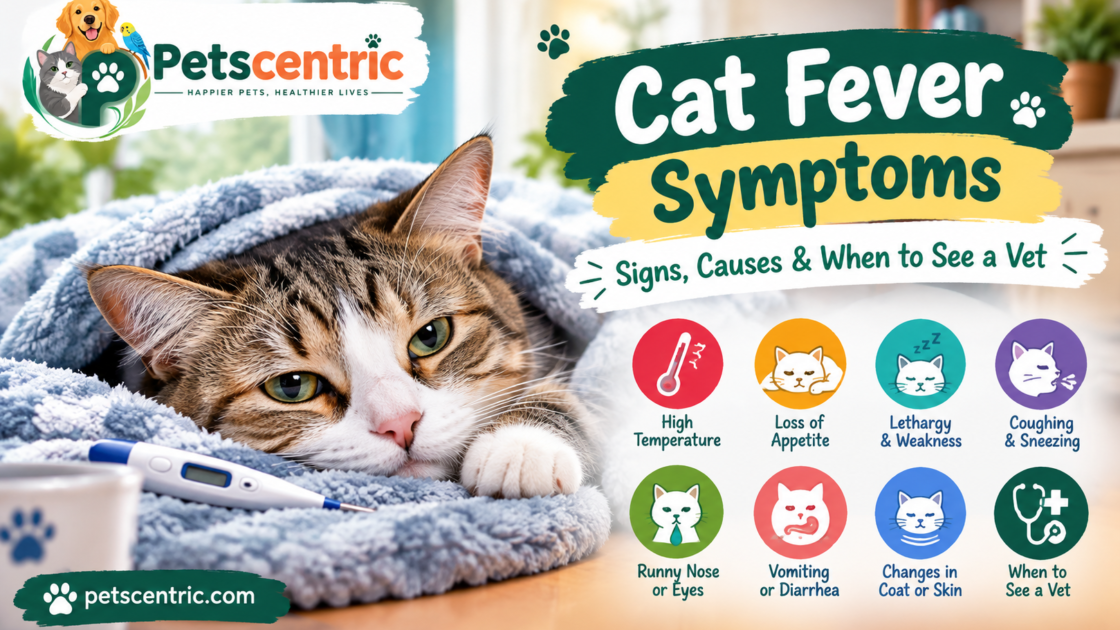
- Normal temperature: 100.5°F to 102.5°F (38.1°C to 39.2°C)
- Fever: above 102.5°F (39.2°C)
- Emergency: 104°F (40°C) or higher
- Top signs: lethargy, appetite loss, hiding, shivering
- Human medications (acetaminophen, ibuprofen, aspirin): never give
Cat fever is a body temperature above 102.5°F (39.2°C), measured with a digital rectal thermometer. Cat fever symptoms include lethargy, loss of appetite, hiding, and shivering, but only a thermometer confirms that a cat has fever. A reading of 104°F (40°C) or higher requires an emergency vet visit.
Cat owners who see a cat stop eating and hide cannot tell a fever from stress or a worse condition. A cat running fever needs a measured number, not a guess. This guide gives the 7 signs of fever, the exact temperature ranges, a 6-step home check, and the thresholds that send a cat to the vet.
What Is a Normal Cat Temperature and What Temperature Is Cat Fever?
What is the normal cat temperature? The Cornell Feline Health Center gives 100.5°F to 102.5°F (38.1°C to 39.2°C) for healthy adult cats at rest. What temperature is cat fever? The Merck Veterinary Manual defines fever (pyrexia) as any reading above 102.5°F, and a high cat temperature begins there.
Handling stress raises temperature, so recheck a borderline reading after 15 to 30 minutes of quiet rest. Fever vs infection: fever is a symptom, and infection is one cause. Elevated body temperature is one of 3 cat vital signs.
Cat fever temperature in Fahrenheit and Celsius:
| Reading | Category | Action |
| Below 99.0°F (37.2°C) | Low (hypothermia) | Same-day vet visit |
| 100.5°F to 102.5°F (38.1°C to 39.2°C) | Normal | Monitor |
| 102.6°F to 103.9°F (39.2°C to 39.9°C) | Fever | Call vet within 24 hours |
| 104.0°F to 105.9°F (40.0°C to 41.0°C) | High fever | Emergency vet now |
| 106.0°F (41.1°C) or higher | Life-threatening | Emergency vet now |
Any reading at or above 104°F (40°C) is an emergency, and this table does not replace a vet’s diagnosis.
Cat Fever Symptoms: 7 Signs Your Cat Has a Fever
Do cats get fevers? Yes, at any age. This cat fever signs and symptoms checklist covers the 7 signs your cat has fever, and each justifies taking a temperature.
- Lethargy: Cat fever and lethargy symptoms appear together: the cat has fever and is lethargic, sleeping more than 16 hours a day and ignoring toys.
- Decreased appetite in cats (anorexia): A cat not eating for 24 hours qualifies, and cat fever and not eating appear together when a cat has fever and won’t eat.
- Hiding or withdrawal: A cat with fever withdraws from family members.
- Shivering: Shivering in a warm room signals illness.
- Rapid breathing (tachypnea): Resting breathing above 30 breaths per minute is tachypnea.
- Dehydration: Tacky gums, slow skin tenting, and a capillary refill time over 2 seconds mark dehydration in cats.
- Reduced grooming: A dull or unkempt coat signals reduced grooming.
Vomiting and diarrhea often accompany fever but do not confirm it. The 7 signs also overlap with the signs of common cat diseases and symptoms.
How to Check Cat Temperature at Home in 6 Steps
How to tell if cat has fever comes down to one tool: a digital pet thermometer used rectally, the most accurate home method. These 6 steps show how to take cat’s temperature at home.
- Gather a digital pet thermometer ($8 to $15, varying by model), water-based lubricant, a towel, and a treat. Never use a glass mercury thermometer.
- Wipe the tip with alcohol and lubricate it.
- Wrap the cat in the towel with a helper holding the front half.
- Lift the tail and insert the tip 1 inch. Never force insertion.
- Hold until the thermometer beeps. Stop if the cat bites or thrashes.
- Remove, read, clean, and log the reading with the time.
Ear thermometers are a secondary option and read less reliably than rectal thermometers. Without a thermometer, the checklist signs flag illness but cannot confirm fever.
The best cat thermometer varies by model, and best digital thermometers for cats compares options within the $8 to $15 range.
During our first home check on a [weight]-pound adult cat, the reading took [X] seconds, and the cat tolerated it after a towel wrap and a treat. The ear thermometer read [X]°F lower than the rectal reading.
Cat Feels Hot? Why Warm Ears and a Dry Nose Do Not Prove Fever
How to tell cat fever from a warm cat? Touch fails. The myth says a cat feels hot, so the cat has fever, but ear and nose temperature track room temperature and sun exposure, not core temperature. A cat lying in a sunny window reads warm with a normal core temperature.
Is my cat running a fever if the ears feel warm? Does my cat have a fever if the nose is dry? Neither sign answers it, and cat fever without other symptoms gives no touch clue. Only a thermometer measures core temperature.
Fever raises the body’s hypothalamic set point through the feline immune response, while heat stroke is hyperthermia with the set point unchanged (see heat stroke in cats).
For broader guidance on everyday feline health, see our cat care guide for beginners.
Cat Fever Causes and Treatment: What Vets Diagnose and Do
Common Causes of Fever in Cats
- Why is my cat’s temperature high? Cat fever causes span 6 feline health issues, each an underlying illness: bite-wound abscesses (outdoor, unneutered males), viral disease (feline calicivirus, FeLV, FIV), pyometra (unspayed females), pancreatitis, kidney infection, and cancer.
- Fever of unknown origin (FUO) is fever persisting over 14 days with no diagnosis.
- Is cat fever contagious? Fever is not contagious, but the underlying virus or bacterium can be.
Because several of these conditions can produce overlapping symptoms, see our guide to [common cat diseases and symptoms] for additional context.
How Vets Diagnose and Treat Cat Fever
- Veterinary care starts with bloodwork, urinalysis, and imaging.
- Cat fever treatment includes antibiotics for bacterial causes and IV fluids for dehydration.
Home Care and What Never to Give
- What to do for cat fever at home, and how to comfort a cat with fever: offer fresh water and keep the cat undisturbed in a quiet room at 68°F to 72°F (20°C to 22°C).
- Cat fever home remedies and cat fever home treatment exclude ice baths.
- How to bring down cat fever: only a vet treats fever with cat-safe medication. Acetaminophen (Tylenol), ibuprofen, and aspirin are toxic to cats, according to the ASPCA Animal Poison Control Center.
- Home care supports veterinary treatment and does not replace it.
When to Worry: Emergency Vet Visit Thresholds by Age and Health
Cat fever when to worry depends on the cat. Is cat fever an emergency? A reading of 104°F (40°C) or higher is an emergency for every cat, and how high is too high drops for the 3 groups below.
Kittens Under 12 Weeks
- Any reading above 102.5°F (39.2°C) warrants same-day veterinary care, since kittens dehydrate fast.
Senior Cats Aged 10 Years and Older
- Fever plus appetite loss for 24 hours warrants a vet visit, as kidney disease and cancer risk rise with age.
For additional nutrition and care considerations for older cats, see our guide to choosing food for senior cats.
Cats With Chronic Disease or Recent Vaccination
- Cats with kidney disease, diabetes, or FeLV/FIV carry an underlying illness and need a vet call at the first fever reading.
- Can cats get fevers from vaccines? Cat fever after vaccination within 48 hours is mild and common. Beyond 48 hours, or above 104°F (40°C), requires a vet.
Fever with labored breathing, seizures, or collapse is an immediate emergency at any temperature, so locate a 24-hour emergency vet before a crisis.
Frequently Asked Questions About Cat Fever Symptoms
Can you check cat fever without thermometer?
A thermometer is the only tool that confirms cat fever. Lethargy, appetite loss, hiding, and tacky gums signal illness, but warm ears and a dry nose are unreliable. Two or more signs lasting 24 hours warrant a vet call, even without a temperature reading.
How long does cat fever last?
How long cat fever lasts depends on the cause. Post-vaccine fever resolves within 48 hours. Infection-related fever lasts until treated, often 48 to 72 hours after treatment starts. Fever over 24 hours untreated requires a vet visit, and fever over 14 days is classed as FUO.
How to bring down cat fever?
Only a vet brings down cat fever, using cat-safe medication. Fresh water and a quiet room at 68°F to 72°F (20°C to 22°C) support the cat at home. Ice baths and human drugs (acetaminophen, ibuprofen, aspirin) are dangerous to cats.
Is cat fever contagious?
Cat fever is not contagious, but the virus or bacterium behind it can be, including feline calicivirus and FeLV. The transmission risk depends on the cause. Isolate the sick cat from other cats until a vet identifies the cause of the illness.
Can a vaccine cause fever in a cat?
A vaccine can cause mild fever and lethargy in cats 24 to 48 hours after vaccination. A reading above 104°F (40°C), symptoms beyond 48 hours, or facial swelling need immediate vet care. Cat fever after vaccination that stays below 104°F and clears within 48 hours is common.
Conclusion
A cat temperature above 102.5°F confirms fever, and a reading of 104°F or higher sends the cat to an emergency vet immediately.
Owners replace guesswork with a measured number and a clear next step. The 6-step home check produces the reading, the table places it in a category, and the thresholds by age and health name the next step for kittens, senior cats, and cats with chronic disease. A logged reading with the time gives the vet a record of how the illness progressed.
The free cat temperature log records each reading, the time, and every symptom, so the vet gets exact data on the first call.