How to Treat a Dog Ear Infection at Home Safely
Watching your dog constantly scratch its ears can be worrying. Many pet owners notice the problem only after their dog starts shaking its head or crying when someone touches its ears. Ear infections are one of the most common health problems in dogs, and they should never be ignored. The good news is that early […]
Watching your dog constantly scratch its ears can be worrying. Many pet owners notice the problem only after their dog starts shaking its head or crying when someone touches its ears. Ear infections are one of the most common health problems in dogs, and they should never be ignored. The good news is that early dog ear infection home treatment may help ease mild discomfort while you monitor your dog and arrange proper veterinary care if needed.
Every dog owner wants quick answers when an ear problem appears. Some infections develop after swimming, while others are linked to allergies or excess wax. Whatever the reason, understanding the signs early can prevent the condition from becoming more painful. Home care is meant to support your dog safely, not replace professional treatment when it becomes necessary.
This guide explains everything you should know about dog ear infection home treatment, including common warning signs, safe cleaning methods, possible causes, and how to support a smooth recovery. It is written to help you make informed decisions while keeping your dog’s comfort and health the top priority.
Understanding Dog Ear Infections
Dogs have long, deep ear canals that trap moisture, dirt, and debris much more easily than human ears. When bacteria or yeast begin to multiply inside the ear canal, an infection can develop. Some infections remain mild for a short time, while others spread deeper into the ear and become extremely painful.
Many owners think an ear infection appears overnight, but that usually is not the case. Small signs often appear days before the infection becomes serious. A dog may scratch one ear more than usual, rub its head against furniture, or shake its head repeatedly. These small changes should never be ignored because early dog ear infection home treatment can help reduce discomfort before the condition worsens.
Dogs with floppy ears, allergies, or frequent exposure to water often experience ear infections more often than other breeds. Regular observation makes a big difference because catching the problem early usually leads to faster recovery.
Dog Ear Infection Symptoms You Should Watch For
Recognizing dog ear infection symptoms early is one of the best ways to protect your pet. Dogs cannot tell us when something hurts, so their behavior often becomes the biggest clue.
A dog with an ear infection may constantly shake its head or scratch one ear throughout the day. You may notice redness inside the ear, swelling, or an unpleasant smell. Some dogs develop yellow, brown, or black discharge that sticks inside the ear canal. Others become sensitive whenever someone touches their ears.
In more advanced cases, your dog may lose balance, tilt its head to one side, or seem unusually quiet because moving its head causes pain. Appetite can even decrease if chewing becomes uncomfortable. These dog ear infection symptoms should never be ignored because untreated infections can spread deeper into the ear.
When symptoms continue for more than a day or become worse, professional veterinary care is always the safest option.
What Causes Ear Infections in Dogs?
Understanding dog ear infection causes helps prevent future infections instead of simply treating them over and over again.
One of the most common causes is trapped moisture. Dogs that enjoy swimming or receive frequent baths often have damp ears, creating an ideal place for bacteria and yeast to grow. Proper drying after water activities can significantly reduce this risk.
Allergies are another major reason many dogs experience recurring ear infections. Food allergies, pollen, dust, and seasonal allergies may inflame the ear canal, making infections much easier to develop.
Wax buildup also creates an environment where microorganisms multiply quickly. Ear mites, foreign objects like grass seeds, hormonal disorders, and excessive hair inside the ear canal are additional dog ear infection causes that veterinarians commonly diagnose.
Sometimes the infection itself is only part of the problem. The real cause may be an allergy or another underlying condition that needs proper treatment to prevent repeated infections.
Is Dog Ear Infection Home Treatment Safe?
Many owners wonder whether dog ear infection home treatment actually works. The answer depends on how severe the infection is.
If your dog has only mild irritation without severe swelling, bleeding, or thick discharge, careful home care may provide temporary comfort. However, moderate and severe infections almost always require veterinary medication because bacteria and yeast cannot usually be eliminated with home care alone.
Safe home treatment focuses on keeping the ears clean, dry, and free from excess debris. It does not involve experimenting with random household ingredients or internet remedies. Products like alcohol, hydrogen peroxide, or concentrated vinegar may irritate sensitive ear tissue and make inflammation even worse.
The goal of dog ear infection home treatment is to support healing safely while knowing when professional care becomes necessary.
Dog Ear Cleaning at Home the Right Way
Proper dog ear cleaning at home is one of the best habits for preventing infections and supporting healthy ears.
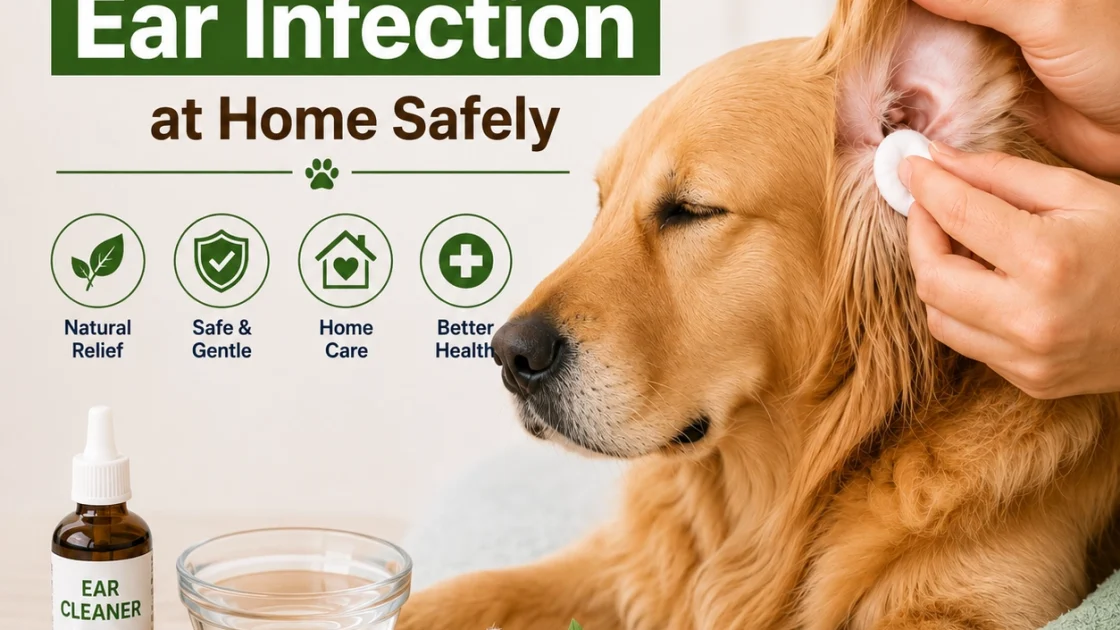
Choose a veterinarian-approved ear cleaning solution that is specifically made for dogs. Gently lift the ear flap and place the recommended amount of cleaner into the ear canal. Massage the base of the ear for around thirty seconds. This helps loosen wax and debris that may be trapped inside.
After the massage, allow your dog to shake its head naturally. Although it may look messy, this movement helps remove loosened debris from deep within the ear canal.
Use a clean cotton pad or soft gauze to wipe away the material that appears at the opening of the ear. Never push cotton swabs deep inside because they often push debris farther into the ear and may even damage the delicate ear canal.
Regular dog ear cleaning at home should always be gentle. Cleaning too often or scrubbing aggressively can irritate healthy ears and increase the risk of infection instead of preventing it.
A simple weekly ear check can help you notice changes before they become painful. Healthy ears should appear light pink, have very little odor, and contain only a small amount of wax. Small routines like these often prevent much bigger health problems later.
Helping Your Dog Find Dog Ear Infection Relief
Every dog owner wants fast dog ear infection relief, but patience is important. Ear infections rarely disappear overnight, and trying multiple home remedies at once can sometimes make the condition worse. The safest approach is to keep the ear clean, dry, and protected while carefully watching your dog’s behavior.
If your dog seems comfortable after gentle cleaning and the redness begins to decrease, continue monitoring the ear over the next day or two. However, if the swelling increases, the odor becomes stronger, or your dog continues scratching constantly, it is time to seek veterinary care. Quick action often prevents a mild infection from becoming a serious one.
Keeping your dog from scratching excessively can also help. Constant scratching may damage the skin inside the ear and create additional irritation. A calm environment and gentle care often support better healing while reducing unnecessary discomfort.
The Best Treatment for Dog Ear Infection Depends on the Cause
Many owners search online for the best treatment for dog ear infection, hoping there is one simple solution for every case. Unfortunately, there is not. Ear infections can be caused by bacteria, yeast, allergies, parasites, or even foreign objects trapped inside the ear canal. Each cause requires a different treatment plan.
When bacteria are responsible, veterinarians often prescribe antibiotic ear drops. If yeast is the problem, antifungal medication may be necessary. Dogs suffering from allergies may also require treatment for the allergy itself, otherwise the infection is likely to return again and again.
This is why guessing can be risky. Two dogs may have similar symptoms but completely different underlying causes. Proper diagnosis allows your pet to receive the best treatment for dog ear infection, leading to faster healing and fewer recurring problems.
Mistakes to Avoid During Home Care
One of the biggest mistakes owners make is using products that were never designed for a dog’s ears. Human ear drops, alcohol, essential oils, or strong cleaning solutions may irritate sensitive tissue and delay healing.
Another common mistake is cleaning the ear too aggressively. While cleanliness is important, excessive rubbing can make inflamed skin even more painful. Gentle care always works better than force.
Some owners stop treatment as soon as their dog looks better. This can allow the infection to return because the underlying problem has not fully healed. Following professional advice until treatment is complete gives your dog the best chance of making a full recovery.
Ignoring persistent symptoms is another mistake that should never happen. If your dog develops severe pain, thick discharge, bleeding, or balance problems, home care is no longer enough.
Supporting Dog Ear Infection Recovery
Successful dog ear infection recovery takes time, consistency, and patience. Even after the visible signs disappear, the ear may still be healing internally. Continuing the recommended cleaning schedule helps reduce the chance of another infection developing.
Keep your dog’s ears dry after every bath or swimming session. Moisture trapped inside the ear canal creates the perfect environment for bacteria and yeast. Gently drying the ears with a soft towel after water activities is a simple habit that can make a significant difference.
Nutrition also plays a role in overall health. A balanced diet supports the immune system, helping the body respond better to infections. Dogs with food allergies may benefit from dietary changes recommended by a veterinarian, reducing repeated ear inflammation over time.
During dog ear infection recovery, continue checking the ears every few days. Healthy ears should gradually become cleaner, less red, and free from unpleasant odors. If symptoms suddenly return, another examination may be necessary.
How to Prevent Future Ear Infections
Preventing infections is always easier than treating them. Regular ear inspections allow you to notice changes before they become serious. Looking inside your dog’s ears once every week only takes a minute but can prevent weeks of discomfort later.
Drying the ears after swimming is especially important for dogs that love water. Moisture left inside the ear canal encourages bacteria and yeast to grow quickly.
Routine dog ear cleaning at home using a veterinarian-approved cleaner can remove excess wax and debris before problems develop. Dogs with floppy ears or long ear hair may require more frequent inspections because air circulation inside the ear is naturally limited.
Managing allergies is another important step. If your dog experiences recurring ear infections during certain seasons, discussing allergy management with your veterinarian may reduce future infections significantly.
Healthy ears are usually clean, light pink, and almost odorless. Becoming familiar with your dog’s normal ear appearance makes it much easier to notice early warning signs.
When You Should Visit a Veterinarian Immediately
Although dog ear infection home treatment can provide temporary support in mild situations, there are times when professional care should never be delayed.
If your dog cries when the ear is touched, develops heavy discharge, experiences bleeding, loses balance, walks in circles, or seems unusually tired, immediate veterinary attention is recommended. These symptoms may indicate a deeper infection that cannot be treated safely at home.
Delaying treatment may allow the infection to spread into the middle or inner ear, increasing both pain and recovery time. Early diagnosis often leads to quicker treatment and better long-term ear health.
Conclusion
Keeping your dog’s ears healthy begins with paying attention to the small changes that many owners overlook. Recognizing dog ear infection symptoms, understanding the most common dog ear infection causes, and practicing safe dog ear cleaning at home can reduce discomfort and help prevent more serious problems. While dog ear infection home treatment may provide temporary support for mild irritation, it should never replace professional veterinary care when symptoms become severe or continue to worsen.
Remember that the best treatment for dog ear infection depends on identifying the actual cause. Gentle cleaning, keeping the ears dry, monitoring your dog’s behavior, and seeking timely veterinary advice all contribute to better dog ear infection relief and a smoother dog ear infection recovery. A little preventive care each week can help your dog stay comfortable, active, and free from painful ear infections for years to come.
Frequently Asked Questions
What is the safest dog ear infection home treatment?
The safest dog ear infection home treatment includes gently cleaning the ear with a veterinarian-approved ear cleaner, keeping the ear dry, and closely monitoring symptoms. Avoid using household products unless advised by a veterinarian.
How do I know if my dog has an ear infection?
Common dog ear infection symptoms include head shaking, scratching the ears, redness, swelling, bad odor, unusual discharge, and pain when the ears are touched.
Can dog ear cleaning at home prevent infections?
Yes. Regular dog ear cleaning at home helps remove dirt, moisture, and excess wax that may contribute to infections. Cleaning should always be gentle and performed with products made specifically for dogs.
What are the most common dog ear infection causes?
The most common dog ear infection causes include trapped moisture, allergies, bacteria, yeast, ear mites, wax buildup, and foreign objects inside the ear canal.
When should I stop home treatment and visit a veterinarian?
If your dog develops severe pain, bleeding, heavy discharge, swelling, balance problems, or symptoms that continue for more than a couple of days, you should stop home treatment and seek veterinary care immediately.