
Cat Ear Infection Symptoms: Causes Treatment Prevention
Symptoms: head shaking, dark or yellow discharge, odor, redness, scratching Common causes: ear mites, yeast overgrowth, bacterial infection, allergies Diagnosis: vet otoscope exam plus ear swab cytology Treatment: cause-specific prescription drops, 1 to 4 week course Prevention: weekly ear checks, allergy management, drying ears after water exposure Cat Ear Infection: Symptoms, Causes & Treatment A […]
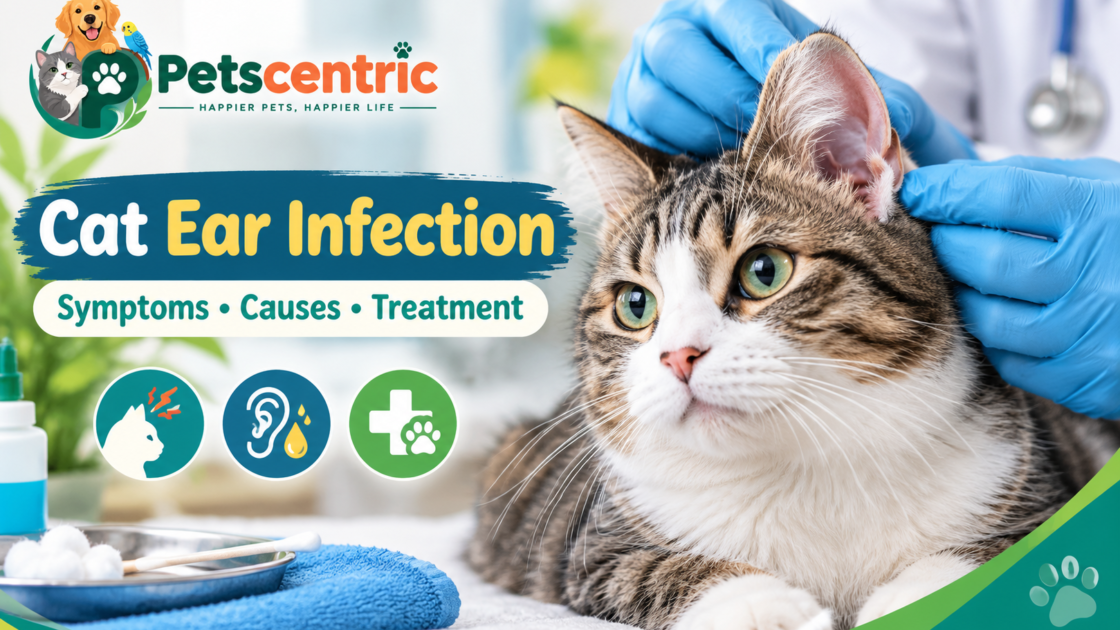
- Symptoms: head shaking, dark or yellow discharge, odor, redness, scratching
- Common causes: ear mites, yeast overgrowth, bacterial infection, allergies
- Diagnosis: vet otoscope exam plus ear swab cytology
- Treatment: cause-specific prescription drops, 1 to 4 week course
- Prevention: weekly ear checks, allergy management, drying ears after water exposure
Cat Ear Infection: Symptoms, Causes & Treatment
A cat ear infection produces four primary symptoms: head shaking, dark brown or yellow discharge, a strong odor from the ear canal, and visible redness or swelling inside the ear flap. Ear mites, yeast overgrowth, bacterial infection, and allergies cause these ear infection symptoms in cats. Veterinarians classify this condition as otitis externa in felines and confirm the exact cause with an otoscope exam before prescribing treatment.
Cat owners cannot tell the difference between mites, yeast, and bacterial infection by looking at the ear alone. This guide identifies each symptom by cause, lists vet-confirmed treatment steps, and gives a prevention routine that reduces recurrence. If you’re also learning the basics of feline care, our complete guide to common cat diseases and symptoms provides broader information about other conditions to watch for.
Signs and Symptoms of a Cat Ear Infection
The ear canal signals infection through five distinct channels: head motion, discharge, odor, skin condition, and behavior. Head shaking or tilting more than 5 times per hour signals active irritation inside the canal. Discharge color maps to likely cause: dark brown or black discharge indicates mites, yellow or waxy discharge indicates yeast, and greenish or bloody discharge indicates bacterial infection.
Signs of cat ear infection include:
- Head shaking or tilting more than 5 times per hour
- Discharge color change: dark brown/black (mites), yellow/waxy (yeast), greenish/bloody (bacterial)
- Foul smelling discharge with a fermented, musty odor
- Cat scratching ears intensely enough to cause hair loss around the ear base
- Behavioral shifts: reduced appetite, avoidance of head touch, ear held flat against the skull
Skin irritation around the ears can sometimes accompany other dermatological problems. For broader guidance on maintaining your pet’s skin, see our pet skin care routine guide.
A cat ear clear of infection produces no odor within 10 seconds of lifting the ear flap during a routine home check. Ear canal inflammation changes this baseline immediately: the skin reddens, the canal narrows visibly, and the odor registers within the first few seconds of exposure.
Signs of Cat Ear Infection vs. Normal Ear Wax
Normal cat ear wax appears light brown or tan in small amounts, coating the outer canal without pooling. A healthy ear requires cleaning once every 2 to 4 weeks for most cats and once weekly for breeds prone to wax buildup. Discharge crosses into abnormal territory the moment color shifts to black, yellow, or green, or the moment volume increases enough to mat the fur beneath the ear.
For owners still getting familiar with routine feline health checks, our guide to caring for a cat for beginners covers other basic areas of preventive cat care.
What Causes Cat Ear Infections
Four causal categories account for nearly all feline ear infections: ear mites, yeast overgrowth, bacterial infection, and allergies. Ear mites (Otodectes cynotis) affect kittens under 6 months most frequently and spread between cats through direct contact within multi-cat households. Yeast overgrowth (Malassezia) links to allergies, humid climates, and ear anatomy in cats with floppy or hairy ears.
| Cause | Typical Age/Breed Risk | Discharge Appearance | Contagious to Other Pets |
| Ear mites (Otodectes cynotis) | Kittens under 6 months, outdoor cats | Dark brown/black, coffee-ground texture | Yes |
| Yeast (Malassezia) | Cats with allergies, humid climates | Yellow, waxy | No |
| Bacterial infection | Secondary to mites or yeast | Greenish, bloody | No |
| Allergies (food/environmental) | Cats with recurrent yeast infections | Varies, often yellow-brown | No |
| Anatomical (narrow canals, excess hair) | Scottish Fold, Persian | Varies by secondary cause | No |
Bacterial infection develops secondary to mites or yeast in most cats rather than as a primary cause on its own. Allergies, whether food-based or environmental, function as the underlying trigger behind recurrent yeast infections in affected cats. Breeds with narrow ear canals or excess ear hair, including Scottish Folds and Persians, carry elevated anatomical risk for all four causes.
The Cornell University College of Veterinary Medicine identifies otitis externa as one of the most common reasons cats present for ear-related veterinary visits, with ear mites accounting for a substantial share of cases in kittens and young cats. Bacterial and yeast infections make up the remaining majority, typically arising as secondary complications rather than primary triggers.
Ear Mite Infestation vs. Yeast Ear Infection
Ear mites appear under otoscope examination as small moving specks against the canal wall, visible in real time during the exam. Yeast infections lack this visible parasite entirely, presenting instead as inflamed tissue with a distinct waxy coating. Otodectes cynotis spreads from cat to cat through direct contact, while Malassezia yeast overgrowth does not transfer between animals.
How Vets Diagnose a Cat Ear Infection
- Otoscope exam: The veterinarian inspects the ear canal and eardrum for integrity, redness, and visible parasites.
- Ear swab cytology: A sample placed under a microscope identifies mites, yeast, or bacteria within 10 to 15 minutes in-clinic.
- Culture and sensitivity testing: This step applies to recurrent infections or cases showing antibiotic resistance.
- Tympanic membrane check: The eardrum’s condition determines which ear drops are safe, since a ruptured eardrum eliminates several medication options from the safe list.
Home use of cotton swabs deep in the ear canal risks eardrum damage before a veterinarian confirms the eardrum is intact. This diagnostic sequence exists specifically to avoid that risk.
Because ear infections can occur alongside other feline infections, owners should also know the warning signs of related conditions. Our cat eye infection treatment and prevention guide explains how to recognize and respond to another common source of eye and facial discomfort.
How to Treat a Cat Ear Infection
Treatment splits into three cause-specific protocols. Ear mite treatment uses prescription miticide drops or a topical parasiticide such as selamectin, applied over a 2 to 4 week course. Yeast infection treatment relies on antifungal ear drops, often miconazole-based, for 7 to 14 days. Bacterial infection treatment uses antibiotic ear drops, or oral antibiotics in severe cases, over 10 to 14 days.
| Cause | Medication Type | Typical Course Length | At-Home Care Required |
| Ear mites | Prescription miticide/topical parasiticide | 2 to 4 weeks | Vet-directed cleaning before each application |
| Yeast | Antifungal ear drops | 7 to 14 days | Vet-directed cleaning before each application |
| Bacterial | Antibiotic ear drops or oral antibiotics | 10 to 14 days | Vet-directed cleaning before each application |
Vet-directed ear cleaning happens before medication application in every protocol, never as a substitute for it. A standard vet visit for diagnosis and initial medication ranges from $85 to $250 in the US, depending on which diagnostics the case requires (region-dependent). A treated ear shows measurable change within its course length: no odor detected on a cotton pad after wiping the canal, and no discharge residue by the final week of treatment.
No home remedy replaces veterinary antifungal, antibacterial, or antiparasitic medication. Ruptured eardrums make certain ear cleaners dangerous, and a licensed veterinarian must diagnose the exact organism before treatment starts.
Home Remedies for Ear Infections — What Actually Helps
Diluted apple cider vinegar solutions are not vet-recommended for active infections; the acidity irritates already-inflamed tissue. A vet-approved cleaning solution supports healing between medication doses but does not replace the medication itself. A warm compress reduces swelling discomfort only and does not address the underlying mites, yeast, or bacteria.
Never apply human ear drops, alcohol-based solutions, or essential oils to a cat’s ear canal. These substances damage ear tissue and worsen inflammation regardless of the original cause.
Common Mistakes and Myths About Cat Ear Infections
Myth: Dark ear wax always means mites.
Fact: Yeast and bacterial infections also produce dark discharge. Only cytology confirms the exact cause.
Myth: Ear infections clear up on their own.
Fact: Untreated infections in cats with narrow ear canals progress to chronic otitis externa and can rupture the eardrum.
Myth: Indoor cats can’t get ear mites.
Fact: Mites transfer from other household pets, including dogs, regardless of the cat’s outdoor access.
Mistake: Stopping medication early once symptoms disappear.
This allows recurrence within days, since the underlying organism survives at lower, symptom-free levels.
Self-diagnosis delays proper treatment in every one of these cases. A cat ear infection that won’t go away after a full medication course requires a recheck exam, not a switch to a different home treatment.
Preventing Ear Infections in Cats
Check ears weekly. Visual inspection catches discharge or odor before it progresses; at-risk breeds need monthly cleaning in addition to the weekly check.
Manage allergies directly. Removing the identified food or environmental trigger reduces the yeast recurrence rate in affected cats. Diet is one part of overall feline health, so owners can also review our guide to healthy homemade cat food recipes when evaluating their cat’s nutrition.
Dry ears within 10 minutes after baths or swimming to prevent moisture-driven yeast growth. If your cat spends time outdoors or around water, our guide on taking cats to the beach safely covers additional considerations for reducing stress and managing water exposure.
Treat all household pets simultaneously during a mite outbreak, since treating only the symptomatic cat leaves a reinfection source active.
Schedule vet rechecks every 3 to 6 months for cats with a history of chronic otitis externa, regardless of visible symptoms at the time of the appointment.
Ear wax buildup and, in rare cases, polyp-related ear blockage cause recurrent infections that require imaging beyond a standard otoscope exam. Ceruminous gland function varies by individual cat, which is why identical prevention routines produce different wax volumes across cats in the same household.
Frequently Asked Questions About Cat Ear Infections
What does a cat ear infection smell like?
A cat ear infection produces a musty, yeasty, or sour odor depending on the underlying cause. Any strong smell coming from the ear canal is abnormal. Smell alone does not identify which organism caused it; cytology testing is required for that.
How long does a cat ear infection take to heal?
Healing time depends on the cause: ear mite infections take 2 to 4 weeks, yeast infections take 1 to 2 weeks, and bacterial infections take 10 to 14 days. A recheck exam confirms full resolution before medication stops.
How do you tell if a cat has an ear infection or just dirty ears?
Normal ear wax appears light brown with minimal odor and stays confined to the outer canal. Infection signs include a discharge color change to yellow, brown, or green, a foul odor, scratching, and visible redness inside the ear flap.
What antibiotics treat a cat ear infection?
Veterinarians prescribe topical antibiotic ear drops, often combined with antifungal or anti-inflammatory ingredients in a single formulation, based on culture and sensitivity results. A vet must confirm the bacterial strain before selecting the specific antibiotic class.
When should I take my cat to the vet for an ear infection?
Persistent head tilt, bleeding, suspected eardrum damage, or no improvement after 3 days of vet-approved cleaning all require a same-week vet visit. Kittens and cats with a prior eardrum rupture need faster evaluation given their elevated complication risk.
Conclusion
A cat ear infection requires a veterinary otoscope exam to identify whether mites, yeast, or bacteria caused it before any medication works effectively. Guessing at the cause from discharge color alone leads to the wrong medication and a longer recovery.
Correct identification within the first week of symptoms prevents progression to chronic otitis externa and reduces total treatment cost. Cats treated early complete a single medication course; cats treated late often need culture testing, a longer course, and a recheck exam on top of the original visit.
Schedule an ear exam with your veterinarian within the next 48 hours if your cat shows any of the discharge or odor signs listed above.