How to Choose the Best Food for Pet Birds
Choosing the best food for pet birds is not simply about filling a bowl with seeds and leaving it there. Birds need a balanced combination of nutrients to stay active, maintain healthy feathers, support strong bones, and live a longer, healthier life. Every bird is a little different. A budgie, cockatiel, lovebird, parrot, and macaw […]
Choosing the best food for pet birds is not simply about filling a bowl with seeds and leaving it there. Birds need a balanced combination of nutrients to stay active, maintain healthy feathers, support strong bones, and live a longer, healthier life.
Every bird is a little different. A budgie, cockatiel, lovebird, parrot, and macaw can have very different nutritional needs. Age, species, activity level, and health can all affect what belongs in the food bowl.
The good news? Feeding your bird properly doesn’t have to be complicated. Once you understand the basics of pet bird nutrition, making better choices becomes much easier.
Why Proper Pet Bird Nutrition Matters
Good nutrition affects almost everything about a bird’s daily life. A healthy diet supports the immune system, muscles, bones, feathers, digestion, and normal energy levels.
Poor feeding habits can create problems slowly. A bird may look perfectly fine for months while eating an unbalanced diet. Then you may notice dull feathers, weight changes, low activity, or other signs that something isn’t right.
This is why a bird cage cleaning should provide more than one type of food. Variety matters, but balance matters even more.
For example, feeding mostly sunflower seeds may seem convenient because many birds love them. But these seeds can be high in fat, and a bird may selectively eat only the foods it likes.
That’s where careful meal planning comes in.
Bird Pellets vs Seeds: Which Is Better?
One of the biggest questions bird owners ask is about bird pellets vs seeds. Both can have a place in a bird’s diet, but they are not nutritionally equal.
Seeds are naturally appealing to many birds. They provide energy and some nutrients, but a seed-only diet can become unbalanced. Birds often pick their favorite seeds and ignore the rest. Basically, they become tiny food critics.
Pellets are formulated to provide a more consistent mixture of essential nutrients. Depending on the species and product, they can supply protein, vitamins, minerals, carbohydrates, and other nutritional components.
For many companion birds, a quality formulated pellet can serve as an important part of the diet. Seeds can then be offered in appropriate amounts rather than becoming the entire meal.
However, changing a bird from seeds to pellets should be done gradually. Some birds are suspicious of new food. Very suspicious. Introduce new foods slowly and monitor eating habits and body condition.
What Should a Balanced Diet for Pet Birds Include?
A healthy eating routine should contain several food groups rather than relying on one ingredient.
The exact proportions depend on the species, so it’s wise to discuss your bird’s diet with an avian veterinarian. Still, most companion birds benefit from a combination of formulated food, vegetables, suitable fruits, and limited treats.
Vegetables are especially useful because they can provide vitamins, minerals, fiber, and plant-based nutrients.
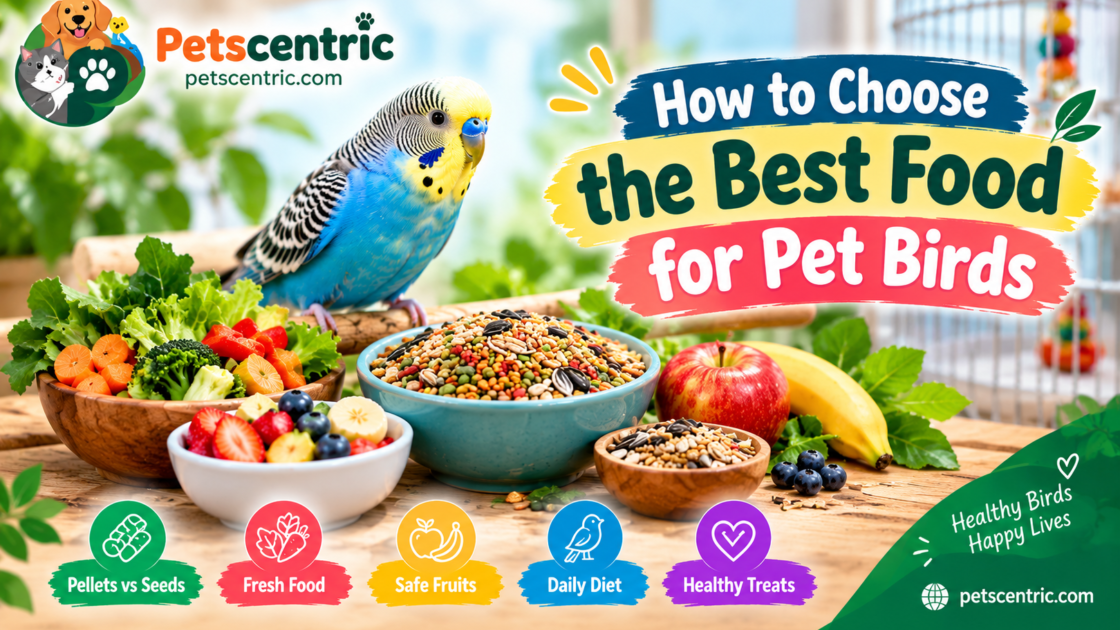
Dark leafy greens, carrots, bell peppers, broccoli, peas, and other bird-safe vegetables can add variety to meals. Different colors also provide different plant compounds.
Fresh food for pet birds should be washed carefully and offered in appropriate portions. Remove uneaten fresh food after a few hours because warm, moist foods can spoil quickly.
Fresh Food for Pet Birds: What Can They Eat?
Fresh foods can make a bird’s meals more interesting while contributing useful nutrients.
Many birds enjoy foods such as leafy greens, carrots, cucumber, bell peppers, squash, broccoli, and small portions of other suitable vegetables.
Fruit can also be offered, but generally in moderation because many fruits contain relatively high amounts of natural sugar.
Some safe fruits for birds include apples without seeds, bananas, blueberries, strawberries, mango, papaya, melon, and pears without seeds.
Preparation matters. Wash fresh produce thoroughly and remove parts that may be unsafe.
Avocado should be avoided. Fruit seeds and pits should also not be casually tossed into the food bowl. Some contain compounds that can be harmful to birds.
When you’re uncertain about a particular food, check with an avian veterinarian before offering it.
Creating a Daily Diet for Pet Birds
A consistent daily diet for pet birds makes feeding easier for both you and your bird.
Instead of giving the same food every day, think about creating a simple rotation. Pellets can form an important nutritional foundation, while vegetables and suitable fresh foods provide variety.
Seeds can be used according to your bird’s nutritional needs, especially when recommended by a professional. Treats should remain limited.
Water is just as important as food. Your bird should have access to clean, fresh drinking water every day. Food and water containers should also be cleaned regularly to prevent bacterial growth.
Observe your bird while eating. Is it actually consuming the food, or simply throwing it around? Birds are excellent at making a huge mess while giving the impression that they ate everything.
Healthy Bird Treats Without Overdoing It
Treats are useful for bonding, training, and adding variety, but they should not replace nutritious meals.
Healthy bird treats can include small portions of bird-safe fruits, vegetables, or other appropriate foods recommended for your bird’s species.
Treats should stay relatively small. A treat is supposed to be an extra, not the main course.
Avoid making fatty or sugary human foods a regular part of your bird’s routine. Chocolate, alcohol, caffeine, heavily salted foods, and foods containing unsafe ingredients should never be treated casually.
If you’re training your bird, tiny food rewards can work surprisingly well. Sometimes a little piece of a favorite safe food gets more cooperation than a long speech.
How to Choose Quality Bird Food
When shopping for bird food, don’t choose based only on attractive packaging or a familiar brand name.
Look at the ingredient list and nutritional information. Choose food appropriate for your bird’s species, age, and life stage.
A food designed for a small parakeet may not be suitable as the primary diet for a large parrot. Nutritional requirements vary considerably.
Freshness matters too. Store dry food in a cool, dry place and keep the container properly sealed. Old food can lose quality and may become contaminated if stored poorly.
If your bird has a medical condition, obesity, feather problems, or unusual eating behavior, professional nutritional advice becomes even more important.
Foods Pet Birds Should Avoid
Knowing what not to feed is just as important as knowing what to provide.
Some foods can be dangerous for birds, including avocado, chocolate, alcohol, caffeine, and foods containing excessive salt or certain toxic ingredients.
You should also avoid feeding birds foods that are heavily processed, greasy, or loaded with sugar.
Don’t assume that something is safe simply because humans eat it. Birds have different metabolisms, and their bodies can react very differently to certain substances.
When introducing something new, research it first. A few seconds of checking can prevent a serious problem.
Nutrition Works Together With Overall Bird Care
Food is only one part of keeping a companion bird healthy.
A nutritious diet works best alongside good hygiene, exercise, mental stimulation, and regular observation.
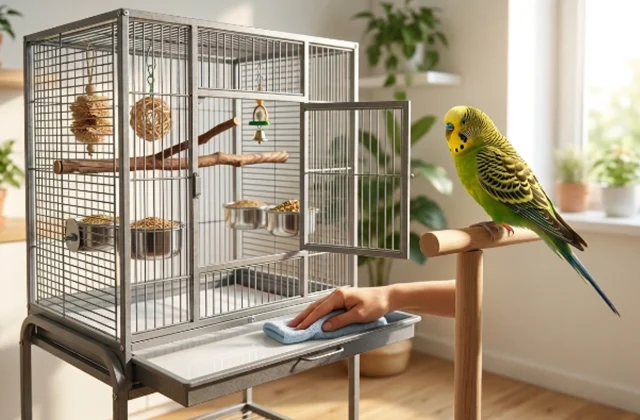
For example, bird cage cleaning helps reduce contamination around food and water bowls. Clean perches and a hygienic living environment also make it easier to notice changes in droppings or eating habits.
Likewise, bird grooming tips can help owners understand normal feather, nail, and beak care. However, grooming should never replace veterinary care when something looks abnormal.
Spend time with your bird too. Changes in appetite, droppings, weight, activity, or feather condition can sometimes be early signs that your bird needs professional attention.
How to Transition Your Bird to Better Food
Changing food suddenly can cause stress and may lead a bird to refuse unfamiliar food.
A gradual transition is usually easier. Start by introducing a small amount of the new food alongside the familiar diet. Increase the new food slowly while monitoring how much your bird actually eats.
Some birds may play with pellets before they learn to recognize them as food. You can make new foods more interesting by placing them near familiar favorites.
Patience is important. Don’t assume the bird dislikes something forever just because it ignored it on day one.
And never intentionally starve a bird into accepting a new diet. If your bird stops eating properly, contact an avian veterinarian.
Signs Your Bird’s Diet May Need Attention
Your bird’s appearance and behavior can provide useful clues.
Changes such as unexplained weight gain or loss, reduced activity, poor feather condition, excessive food selectivity, or changes in droppings may deserve attention.
Remember that birds often hide illness until they are quite unwell. That’s why regular observation is important.
If you notice a sudden change in appetite, breathing, behavior, droppings, or overall appearance, don’t simply change the food and wait. Seek veterinary advice.
Conclusion
Choosing the best food for pet birds means thinking beyond seeds and treats. A nutritious routine should be appropriate for your bird’s species and should provide a sensible combination of formulated food, fresh vegetables, suitable fruits, and carefully limited treats.
Understanding pet bird nutrition, comparing bird pellets vs seeds, offering appropriate fresh food for pet birds, and learning which fruits are safe can make everyday feeding much easier.
Most importantly, don’t chase perfection. Focus on consistency, variety, freshness, and your bird’s individual needs.
At Petscentric, we believe good pet care starts with simple, practical information that helps owners make better everyday decisions. Your bird may be small, but its nutritional needs are important. Feed thoughtfully, observe closely, and give your feathered companion the care it deserves.
Frequently Asked Questions
1. What is the best food for pet birds?
The best choice depends on the bird’s species, age, health, and activity level. For many companion birds, a quality formulated pellet can provide an important nutritional foundation, supplemented with suitable vegetables and limited fruit or treats.
2. Can pet birds eat seeds every day?
Seeds may be included in some birds’ diets, but a seed-only diet can be nutritionally unbalanced. Many birds selectively eat high-fat seeds, so seeds should be offered according to the bird’s individual nutritional requirements.
3. What are safe fruits for birds?
Common safe fruits for birds include apples without seeds, blueberries, strawberries, bananas, mango, papaya, pears without seeds, and melon. Fruits should generally be offered in moderate portions and prepared appropriately.
4. Are pellets better than seeds for pet birds?
Pellets are formulated to provide more consistent nutrition than a diet based primarily on seeds. However, the ideal diet varies by species, so an avian veterinarian can help determine the most suitable feeding plan.
5. How often should I give fresh food to my bird?
Many companion birds can benefit from suitable fresh vegetables and other fresh foods as part of their regular diet. Portions should be appropriate for the bird, and uneaten moist food should be removed after a few hours to reduce spoilage.