Why Is My Dog Vomiting Common Causes and What to Do
Seeing your dog suddenly vomit can be worrying. One minute they seem completely normal, and the next there is food, foam, or yellow bile on the floor. So, why is my dog vomiting? Sometimes vomiting is caused by something simple, such as eating too quickly or getting into the trash. But vomiting can also point […]
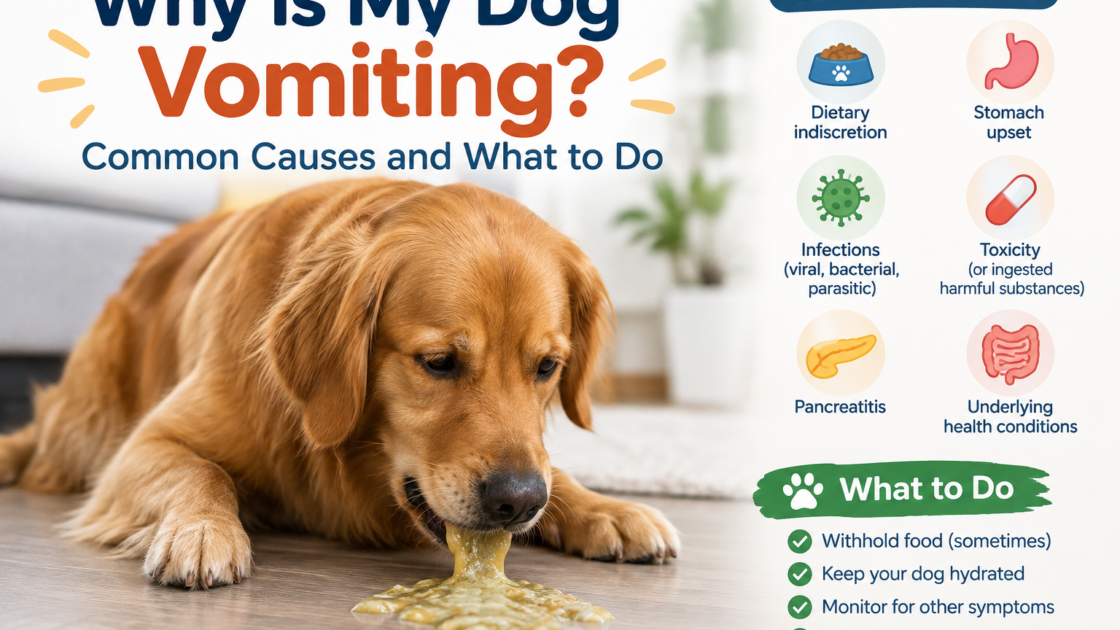
Seeing your dog suddenly vomit can be worrying. One minute they seem completely normal, and the next there is food, foam, or yellow bile on the floor. So, why is my dog vomiting?
Sometimes vomiting is caused by something simple, such as eating too quickly or getting into the trash. But vomiting can also point to infections, pancreatitis, poisoning, intestinal blockage, or other medical problems.
Understanding the possible dog vomiting causes, watching for other symptoms, and knowing when to contact a veterinarian can make a big difference.
Why Is My Dog Vomiting?
Vomiting is the forceful emptying of the stomach or upper digestive tract. It usually involves nausea, retching, drooling, and abdominal contractions. This is different from regurgitation, which generally happens without strong abdominal effort and often brings up undigested food soon after eating.
The answer to “why is my dog vomiting” depends on what your dog ate, how often they are vomiting, what the vomit looks like, and whether other symptoms are present.
A single episode in an otherwise happy, healthy weight for my dog alert dog may not always mean something serious. Repeated vomiting is another story.
Common Dog Vomiting Causes
There are many causes of vomiting in dogs, ranging from minor stomach upset to serious illness.
One of the most common reasons is dietary indiscretion. Dogs are curious eaters. They may grab table scraps, spoiled food, garbage, plants, or something from the garden. Their stomach may simply react badly to it.
Food intolerance or a sudden change in diet can also upset the digestive system. Eating a large meal too quickly may contribute as well.
Parasites and gastrointestinal infections can cause vomiting, sometimes along with diarrhea and reduced appetite. More serious conditions, including pancreatitis, kidney disease, liver disease, inflammatory bowel disease, and certain cancers, can also cause vomiting.
Foreign objects are another important concern. Dogs sometimes swallow toys, socks, bones, pieces of plastic, or other objects. If an object becomes lodged in the digestive tract, vomiting may become frequent and severe. An obstruction can become life-threatening without treatment.
Dog Vomiting After Eating: What Does It Mean?
Dog vomiting after eating can happen for several reasons.
If your dog eats very quickly, overeats, or immediately runs around after a meal, their digestive system may struggle to handle it. Some dogs also vomit after eating food that does not agree with them.
Pay attention to what comes up.
If food appears almost unchanged and there was little or no retching, it may actually be regurgitation rather than true vomiting. Regurgitation commonly occurs shortly after eating or drinking.
On the other hand, repeated vomiting after meals deserves more attention. It may indicate irritation of the stomach, a digestive disorder, or even an obstruction.
Dog Vomiting in the Morning
Some owners notice their dog vomiting mainly in the morning. Often, the material may contain yellowish bile or foam because the stomach has been empty for several hours.
Occasional morning vomiting does not automatically mean something dangerous. Still, a repeated pattern should not simply be ignored.
If dog vomiting in the morning happens regularly, especially with poor appetite, weight loss, diarrhea, abdominal discomfort, or tiredness, arrange a veterinary examination. Persistent vomiting can be associated with several digestive and non-digestive conditions.
Keep a simple record. Note the time, appearance of the vomit, meals, treats, bowel movements, and your dog’s behavior. Those little details can help your veterinarian.
Dog Vomiting Symptoms to Watch For
Vomiting itself is a symptom, not a diagnosis. Other signs can help show whether your dog may have a simple stomach upset or a more serious problem.
Common dog vomiting symptoms may include nausea, excessive drooling, repeated swallowing, loss of appetite, diarrhea, abdominal discomfort, weakness, or dehydration.
Look at your dog’s overall behavior.
A dog that vomits once but remains alert, interested in their surroundings, and willing to drink may be less concerning than a dog that repeatedly vomits and becomes weak or withdrawn.
Blood in vomit is particularly concerning. Fresh red blood or material that resembles dark coffee grounds can indicate bleeding in the digestive tract and requires veterinary attention.
Dog Stomach Problems That Can Cause Vomiting
The digestive system is sensitive, and several dog stomach problems can trigger vomiting.
Gastritis, for example, involves inflammation of the stomach lining. It can occur after a dog eats irritating material, spoiled food, certain medications, toxins, or other substances. Infections and parasites can also affect the stomach and intestines.
Pancreatitis is another important possibility. It can cause vomiting, abdominal pain, poor appetite, and lethargy.
Then there are intestinal blockages. These are particularly concerning because a swallowed object can prevent food and fluids from moving normally through the digestive tract. Vomiting may become persistent, and the dog may develop abdominal pain, dehydration, weakness, or swelling.
This is why guessing the cause based only on the appearance of vomit isn’t always safe.
Dog Vomiting Home Care: What Can You Do?
If your dog has vomited once and otherwise seems completely normal, monitor them closely.
Keep fresh water available. Vomiting can contribute to dehydration, and water should not simply be withheld without veterinary guidance.
Avoid giving rich treats, table scraps, fatty foods, or unfamiliar food while the stomach settles.
If vomiting has stopped, your veterinarian may recommend small portions of an easily digestible diet and gradually returning to the normal diet. The exact approach can depend on your dog’s age, health, size, and the suspected cause.
Do not give human medicines unless your veterinarian specifically tells you to. Some medications that are safe for people can be dangerous for dogs.
And never try to make your dog vomit after suspected poisoning unless a veterinarian or animal poison professional specifically instructs you to do so.
When Is Dog Vomiting an Emergency?
Knowing the signs of a dog vomiting emergency is extremely important.
Contact a veterinarian promptly if your dog is vomiting repeatedly, cannot keep water down, becomes weak or unusually sleepy, develops abdominal pain, has diarrhea, shows signs of dehydration, or stops eating.
Emergency care is especially important when you suspect poisoning or a swallowed foreign object.
A swollen or painful abdomen combined with repeated unproductive retching can also be a serious emergency because it may occur with gastric dilatation-volvulus, commonly called bloat. Profuse vomiting, severe pain, collapse, breathing problems, pale or bluish gums, or extreme weakness also warrant immediate veterinary attention.
When in doubt, call your veterinarian. It is better to ask early than wait while a potentially serious problem develops.
How to Prevent Vomiting in Dogs
You cannot prevent every episode of vomiting, but you can reduce several common triggers.
Feed a consistent, appropriate diet and avoid sudden food changes. Keep garbage, spoiled food, medications, chemicals, toxic plants, and small objects out of your dog’s reach.
If your dog eats extremely fast, discuss slower feeding methods with your veterinarian. Regular parasite prevention and routine veterinary examinations are also important parts of overall digestive and puppy health problems prevention, particularly for young dogs.
For puppies, extra caution is needed. Puppies can become dehydrated quickly, and infectious diseases such as parvovirus can cause severe gastrointestinal illness.
Good everyday care matters. So does noticing changes early.
When Should You Call the Vet?
There is no single number of vomiting episodes that is safe for every dog. Age, size, existing medical conditions, and other symptoms all matter.
A dog with occasional mild vomiting may only need close observation, while repeated vomiting or vomiting combined with other symptoms can require testing.
Veterinarians may use blood and urine tests, fecal testing, X-rays, ultrasound, or other diagnostic procedures to identify the underlying problem. This is particularly important when vomiting is persistent or accompanied by pain, weakness, weight loss, dehydration, or blood.
Conclusion
So, why is my dog vomiting? The answer can be as simple as eating something unpleasant, but vomiting can also be connected to infections, parasites, pancreatitis, toxins, intestinal obstruction, or other health conditions.
One isolated episode in an otherwise healthy and active dog may not always be an emergency. Repeated vomiting is different. Watch your dog’s behavior, hydration, appetite, bowel movements, and any changes in the vomit.
At Petscentric, we believe good pet care starts with noticing the small changes before they become bigger problems. If vomiting is frequent, severe, bloody, painful, or associated with weakness or suspected poisoning, contact your veterinarian promptly. Your dog’s behavior is often the first clue that something isn’t right.
FAQs About Dog Vomiting
1. Why is my dog vomiting but acting normal?
A dog may vomit because of eating too quickly, dietary indiscretion, mild stomach irritation, or another temporary digestive upset. If your dog remains active and comfortable after one episode, monitor them closely. Repeated vomiting or additional symptoms should be discussed with a veterinarian.
2. Why is my dog vomiting yellow liquid?
Yellow vomit commonly contains bile, which can appear when the stomach is relatively empty. Occasional bile vomiting may happen, but repeated episodes, poor appetite, pain, diarrhea, or lethargy should not be ignored.
3. Is dog vomiting after eating always serious?
No. Eating too quickly, overeating, or consuming unsuitable food can cause vomiting. However, repeated vomiting after meals may indicate an underlying digestive problem or obstruction and should be evaluated by a veterinarian.
4. When should dog vomiting be considered an emergency?
Seek urgent veterinary care if vomiting is severe or repeated, your dog has blood in the vomit, severe abdominal pain, a swollen abdomen, repeated unproductive retching, extreme weakness, collapse, breathing difficulty, or possible toxin or foreign-object ingestion.
5. What can I give my dog for vomiting at home?
Do not give human anti-vomiting medicines or other medications without veterinary advice. Keep fresh water available and follow your veterinarian’s instructions regarding food. If vomiting continues or your dog develops other symptoms, professional veterinary care is the safest option.