Bird Grooming Tips for Healthy Happy Pet Birds
If you share your home with a pet bird, you already know how much time birds spend cleaning themselves. They straighten their feathers, stretch their wings, and carefully preen throughout the day. It looks simple, but it is actually an important part of staying healthy. Even though birds know how to groom themselves, they still […]
If you share your home with a pet bird, you already know how much time birds spend cleaning themselves. They straighten their feathers, stretch their wings, and carefully preen throughout the day. It looks simple, but it is actually an important part of staying healthy. Even though birds know how to groom themselves, they still need a little help from us. That is where good bird grooming tips become important.
I have seen people worry because their bird looked untidy after losing feathers. Most of the time, nothing was wrong. The bird was simply going through a normal molt. But I have also seen birds with overgrown nails, dirty feathers, and dry skin because their owners didn’t know what to check. Small daily care makes a huge difference. It doesn’t take hours either. Just a few minutes each day can keep your bird comfortable and active.
Healthy Grooming Means a Healthier Bird
Many new bird owners think grooming is only about making a bird look pretty. That really isn’t true. Grooming is closely connected with your bird’s overall health. Clean feathers help birds fly properly, stay warm, and protect their skin. Healthy nails make climbing and perching easier. A well-shaped beak allows birds to eat comfortably.
Good bird health and grooming habits also help you notice changes before they become serious. While spending time with your bird, you may notice damaged feathers, unusual skin, changes in the beak, or swelling around the feet. Finding these signs early can save your bird from future health problems. The best part is that your bird slowly becomes comfortable with being handled. That trust makes future grooming much easier.
Let Your Bird Do What Nature Intended
One of the most valuable natural bird grooming tips is surprisingly easy. Allow your bird enough time to groom itself. Birds naturally clean their feathers by preening. During this process they spread protective oils from a small gland near the tail across every feather. Those oils keep feathers smooth, flexible, and water resistant.
Sometimes new owners worry because their bird seems to preen all day. In most cases, that is perfectly normal. It becomes a concern only if the bird starts pulling feathers out or creating bald patches. Watching your bird preen every day is actually a good sign that it feels relaxed and healthy.
Bath Time Should Never Feel Stressful
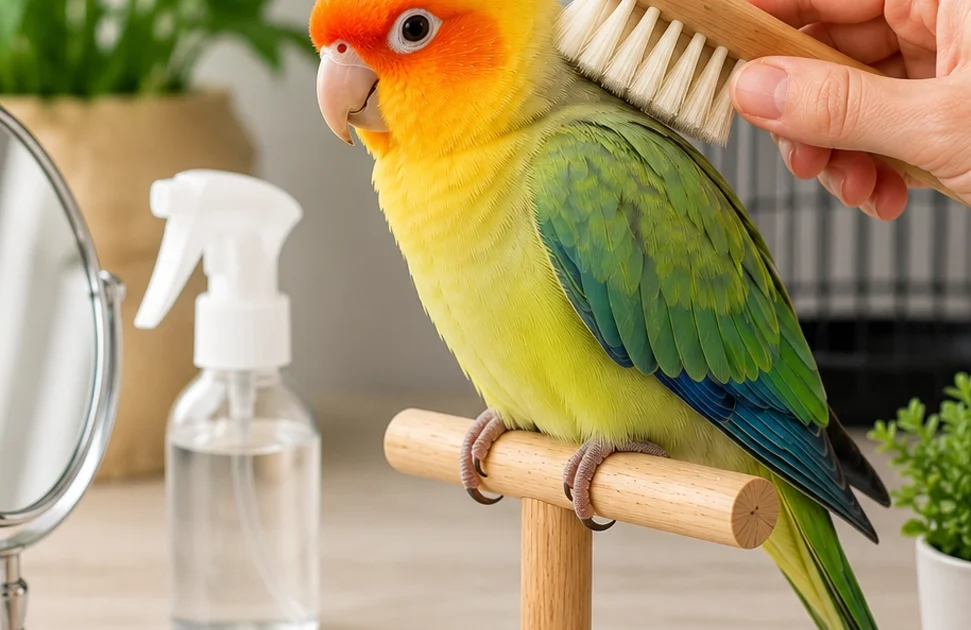
Every bird enjoys bathing in its own way. Some birds happily splash around inside a shallow bowl of water. Others prefer a light mist from a spray bottle. My friend’s budgie refuses to use a water dish but becomes excited every time it sees a gentle mist. Birds definitely have their own personalities.
Using clean, lukewarm water is enough. Human soaps, shampoos, or scented products should never be used because they remove natural oils and may irritate delicate skin. After bathing, simply allow your bird to dry naturally inside a warm room. Avoid using hair dryers because some appliances may release fumes that are harmful to birds. These simple habits are part of safe bird grooming and help keep feathers soft and healthy.
Feather Care Is More Important Than Most Owners Think
Feathers are much more than decoration. They help birds fly, stay warm, communicate, and even protect themselves. Healthy feathers usually appear smooth, bright, and neatly arranged. If feathers suddenly become dull, broken, or greasy, it may be a sign that something needs attention.
Proper bird feather cleaning usually happens through regular bathing and natural preening. There is rarely a need to clean feathers with anything except fresh water. Many birds also lose old feathers during molting. This is completely natural. New feathers replace the old ones over time, so don’t panic if you notice a few feathers around the cage. Patience is often the best approach.
Nail Care Keeps Birds Comfortable
A bird uses its feet almost every minute of the day. Climbing, walking, holding toys, eating, and balancing all depend on healthy feet and nails. As nails continue growing, they sometimes become too long. When that happens, birds may struggle to grip their perch comfortably.
Natural wood perches with different thicknesses often help wear nails down naturally. If trimming becomes necessary, ask an avian veterinarian to demonstrate the correct technique before trying it yourself. Cutting too deeply may cause pain and bleeding. Moving slowly keeps both you and your bird relaxed.
Never Ignore Beak Health
A healthy beak continues growing throughout a bird’s life. Normally, chewing wooden toys, natural branches, and healthy foods helps maintain its shape. If you notice an unusually long, cracked, or uneven beak, avoid trimming it yourself. This may actually be a sign of illness or nutritional imbalance.
Proper bird health and grooming always includes checking the beak during regular handling. Sometimes owners focus only on feathers and forget the beak completely. It deserves just as much attention.
Nutrition Plays a Big Role in Grooming
Even the best grooming routine cannot hide poor nutrition. Feathers are built mostly from protein, while vitamins and minerals support healthy skin and feather growth. A balanced diet with quality pellets, fresh vegetables, leafy greens, and suitable fruits helps birds develop strong feathers throughout the year.
Fresh drinking water should always be available. When nutrition improves, owners often notice shinier feathers and increased activity within just a few weeks. Healthy birds usually show it through their appearance.
A Clean Cage Supports Safe Bird Grooming
Sometimes people spend time bathing their birds but forget to clean the cage. That creates a problem. Dirty food bowls, old droppings, dusty perches, and contaminated water quickly affect your bird’s feathers and health.
Cleaning the cage regularly creates a healthier environment where birds naturally stay cleaner. Fresh water, clean feeding dishes, and washed toys all contribute to safe bird grooming without adding extra work later. Simple habits often prevent bigger problems.
Every Bird Has Its Own Personality
Not every bird enjoys grooming in the same way. Budgies usually enjoy gentle misting. Cockatiels often like shallow baths. Larger parrots may happily bathe under slow-running water while smaller birds prefer standing water.
The trick is watching your own bird instead of comparing it with someone else’s. Over time, you’ll learn what makes your bird comfortable. That understanding builds trust, and grooming becomes something your bird actually looks forward to instead of fearing.
Small Changes Can Tell You Something Important
Daily grooming is one of the easiest ways to monitor your bird’s health. If you suddenly notice missing feathers outside the normal molting season, swollen feet, flaky skin, unusual beak growth, or changes around the eyes and nostrils, it may be time to visit an avian veterinarian.
Birds naturally hide illness. By the time obvious symptoms appear, they may already need medical attention. Regular observation helps you catch those small warning signs much earlier.
Make Grooming Part of Everyday Life
You don’t need a complicated schedule. Spend a few minutes with your bird every day. Watch how it moves. Look at its feathers. Check its feet while it sits on your finger. Offer bathing opportunities every few days and keep the cage clean.
Little routines soon become habits. Your bird will begin expecting them. Eventually grooming becomes another enjoyable part of your daily time together rather than something stressful.
Conclusion
Looking after a bird is about much more than providing food and water. Daily care, gentle handling, and consistent bird grooming tips help birds stay healthy, active, and full of confidence. From regular bathing and bird feather cleaning to checking nails, beaks, and feathers, every small step supports a longer and happier life. Most birds don’t ask for much. They simply need patience, a clean home, healthy food, and someone who pays attention.
Here at Petcentric, we believe every pet bird deserves loving care based on trust rather than force. When you follow these natural grooming habits and make them part of everyday life, you’ll notice brighter feathers, happier behavior, and a stronger bond with your feathered companion. Those little moments of care become the best part of bird ownership.
Frequently Asked Questions
How often should I bathe my pet bird?
Most pet birds enjoy bathing two or three times each week, although some species may like a bath every day. Watch your bird’s behavior and let it choose what feels comfortable.
Is nail trimming necessary for every bird?
Not always. Birds with natural wood perches may wear their nails down naturally. If nails become too long, ask an avian veterinarian to trim them safely.
Why is my bird losing feathers?
Seasonal molting is completely normal. However, excessive feather loss, bald patches, or feather plucking may indicate stress or illness and should be checked by a bird veterinarian.
Can I use shampoo to clean my bird?
No. Birds should only be bathed with clean, lukewarm water. Human shampoos and soaps may damage feathers and irritate sensitive skin.
What is the easiest way to improve bird health and grooming?
Provide a balanced diet, clean cage, fresh water, regular bathing opportunities, and spend a little time observing your bird every day. Consistent care keeps your bird healthy and happy.